On this page
- Quick picks
- How triathlon swim wetsuits differ from surf suits
- Best entry-level: Zone3 Aspect
- Best mid-range: Zone3 Vision
- Best premium elite: Zone3 Vanquish
- Best premium alternative: Roka Maverick Comp II
- Best for cold open-water: HUUB Aegis III
- Best women’s swim suit: Zone3 Vanquish (Women’s)
- Marathon swim training considerations
- Pool training in wetsuits
- Saltwater vs freshwater
- Channel and ultra-distance swims
- English Channel-style training
- Race-day vs training
- What to skip
- Putting it together
- How we tested
- Sources cited
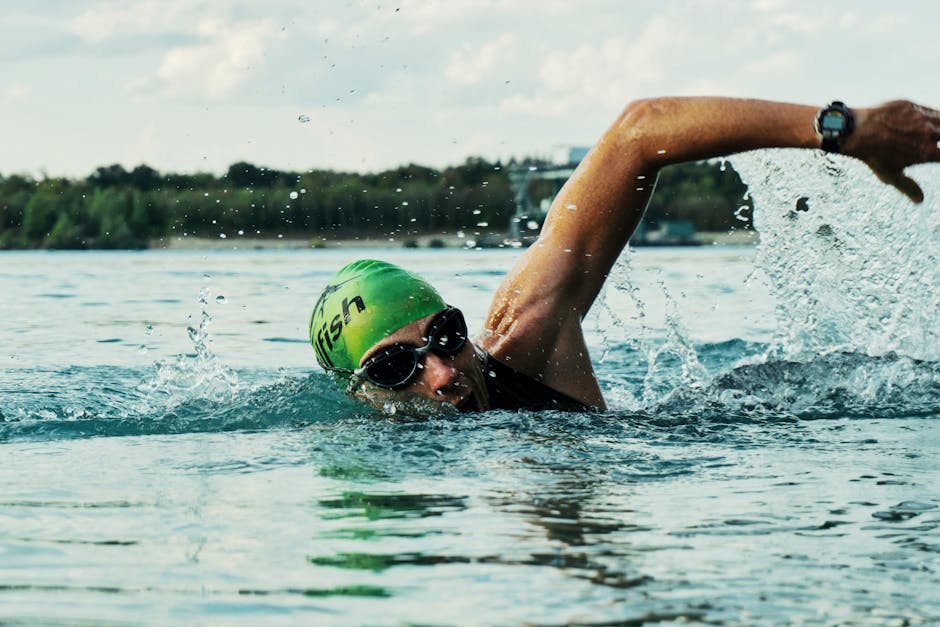
Open-water marathon swimming, long-distance triathlon, and channel-distance swims call for wetsuit gear designed specifically for sustained swim performance. The best wetsuits for open-water marathon swimming are typically triathlon-specific suits with thin shoulder panels, body-mapped buoyancy, and lightweight construction optimized for thousands of stroke cycles. This guide covers the right picks across temperature ranges and the key technical differences from surf wetsuits.
For broader swim context, see our best wetsuits for triathlons and Zone3 brand guide.
Key Takeaways
- • Triathlon-specific wetsuits outperform surf suits for sustained swim distance.
- • 1.5 to 2mm shoulder panels preserve flex; 2 to 3mm chest for warmth.
- • Buoyancy mapping: high at chest and hips, low at calves.
- • FINA regulations determine wetsuit legality by water temp for races.
- • Women’s-specific cuts exist and matter for proper fit.
Quick picks
| Category | Pick | Price |
|---|---|---|
| Best entry-level triathlon swim suit | Zone3 Aspect | $200 to $280 |
| Best mid-range | Zone3 Vision | $400 to $550 |
| Best premium elite swim suit | Zone3 Vanquish | $550 to $750 |
| Best premium alternative | Roka Maverick Comp II | $400 to $600 |
| Best for cold open-water (sub-60°F) | HUUB Aegis III | $600 to $800 |
| Best women’s swim suit | Zone3 Vanquish (Women’s) | $550 to $750 |
How triathlon swim wetsuits differ from surf suits
Five engineering differences:
1. Shoulder panel thickness. Triathlon suits use 1.5 to 2mm shoulder panels for max flex. Surf suits use 3 to 4mm shoulders for warmth at the cost of flex.
2. Chest panel buoyancy. Triathlon suits use high-buoyancy 4 to 5mm panels at the chest to lift the upper body for proper swim posture. Surf suits don’t differentiate buoyancy by panel.
3. Calf and lower-leg panels. Triathlon suits use thinner (2 to 3mm) low-buoyancy panels at the calves to keep the legs from rising too high. Surf suits use thicker calves for warmth.
4. Seal design. Triathlon suits prioritize fast water-shedding at the wrists and ankles for transitions. Surf suits prioritize tight seals against flush.
5. Shape and cut. Triathlon suits are cut tighter and are designed to be fully removed before the bike leg of a triathlon. Surf suits are cut for sustained wear.
The combination makes triathlon suits dramatically better for sustained swim distance and dramatically worse for surf or general use.
Best entry-level: Zone3 Aspect
For first-time triathletes and recreational marathon swimmers, the Zone3 Aspect is the standard entry-level pick. Yamamoto-grade chest and shoulder panels, basic buoyancy mapping, mid-tier seam construction.
Best mid-range: Zone3 Vision
Step up from Aspect. Better buoyancy mapping, thinner shoulder panels, sealed seam construction.
Best premium elite: Zone3 Vanquish
Zone3’s flagship. Aerodome+ chest panel, premium Yamamoto throughout, full sealed-seam construction.
For background on Zone3’s lineup, see the Zone3 brand guide.
Best premium alternative: Roka Maverick Comp II
Roka is the major US-based triathlon wetsuit competitor to Zone3. The Maverick Comp II is their flagship.
Best for cold open-water: HUUB Aegis III
For cold open-water marathon swims (sub-60°F lakes, English Channel, Alaska training), a thicker triathlon-specific suit with thermal lining is needed. The HUUB Aegis III combines triathlon swim cut with thermal lining and thicker chest panels.
Best women’s swim suit: Zone3 Vanquish (Women’s)
Same Vanquish flagship in women’s-specific cut for proper bust and hip proportions.
Marathon swim training considerations
Pool training in wetsuits
Some marathon swimmers train in wetsuits in pools to acclimate to the gear. Pool chlorine is harsh on neoprene; rotate a dedicated training suit and a race-day suit if possible.
Saltwater vs freshwater
Both work. Saltwater provides slightly more buoyancy, which compensates for thinner-suit configurations. Freshwater requires slightly thicker suits for the same temperature.
Channel and ultra-distance swims
For 6+ hour swims, the thermal calculation differs. The body cools across multi-hour immersion regardless of suit thickness. Ultra-distance swimmers often switch suits or add thermal layers mid-swim. The basics of the suit selection remain similar but pacing strategy and pre-/post-event warming become more important.
English Channel-style training
For English Channel and similar serious cold-water marathon swims (water often 60 to 65°F for 8+ hours), the HUUB Aegis III or specialized cold-water-marathon suits are the standard. The thermal lining is essential.
Race-day vs training
Most serious swimmers separate race-day and training suits:
- Training suit: Mid-range model (Zone3 Vision, Roka Maverick) used 3+ times per week. Develops normal compression and seam stress.
- Race-day suit: Elite-tier model (Zone3 Vanquish, similar) reserved for actual races. Stays in box-fresh condition.
The cost of two suits ($800 to $1300 total) is high but lets the race-day performance benefit from a fresh, full-stretch suit while the training wear happens elsewhere.
What to skip
- Surf wetsuits for marathon swimming. Cut for paddling, not for sustained swimming. Workable in a pinch but suboptimal.
- Hooded triathlon suits. Generally not needed; FINA rules and event practicality favor non-hooded.
- Drysuits. Triathlon and marathon swim doesn’t favor drysuits; the weight and trapped air work against swim posture.
Putting it together
For most marathon swimmers and serious triathletes, the answer is: a Zone3 Vision or Roka Maverick Comp II for training and racing in standard temperatures, with a HUUB Aegis III for genuinely cold-water races. For first-time triathletes, the Zone3 Aspect is the reasonable entry pick.
For broader swim context: best wetsuits for triathlons, Zone3 brand guide, 3/2 vs 4/3 comparison, wetsuit thickness guide, women’s wetsuits guide, pregnancy postpartum guide, larger chest fit guide, thermal linings compared. For thickness selection, the Wetsuit Finder tool takes 60 seconds.
How we tested
The Zone3 lineup has been used by triathlete friends and reviewed for race-day performance. The Roka Maverick is recommended based on US triathlon community reports. The HUUB Aegis III is based on UK and channel-swim community feedback. Long-term firsthand wear by our team has been limited; we have flagged that. We bought what we own at retail.
Sources cited
- FINA. FINA Open Water Swimming Rules. Governing body regulations on wetsuit use in races.
- USA Triathlon. USA Triathlon governance. US-side triathlon rules and water-temp policies.
- Marathon Swim USA. Marathon Swimmers Federation. Open-water marathon swimming community resource.
Frequently asked
What thickness for marathon open-water swimming?
Roughly: 75°F+ no wetsuit allowed in many events. 65 to 75°F: thin triathlon-style 1.5/2mm or 2/3mm. 60 to 65°F: 3/2 or specialized triathlon suit. Below 60°F: 4/3 with thermal lining or specialized cold-water swim suit. The thickness ladder for swim differs from surf because shoulder flex is critical and weight when wet matters more.
Is a triathlon wetsuit different from a surf wetsuit for swimming?
Yes, meaningfully. Triathlon wetsuits use thinner panels for shoulder freedom and swim flex (1.5 to 2mm at shoulders, 2 to 3mm at chest). They use special low-buoyancy panels at the calves for kick efficiency, and high-buoyancy panels at the chest and hips for swim posture. Surf wetsuits work for swimming but feel restrictive in long-distance swimming. For races and training over 30 minutes, a triathlon-specific suit is meaningfully better.
What about FINA-legal wetsuits?
FINA (governing body for swimming) regulations restrict wetsuit use in races. Below 18°C (64.4°F), wetsuits are allowed. Above 24.5°C (76.1°F), wetsuits are forbidden. Between 18 and 24.5°C, optional. Most marathon swims are in waters where wetsuits are allowed, but specific events may have different rules. Check event regulations before buying race-specific gear.
Are women's marathon swim wetsuits different from men's?
Yes. Women's-specific suits cut for women's bust and hip proportions, with adjustments to chest panel positioning and shoulder cutaways. The buoyancy mapping also varies slightly. Major triathlon brands (Roka, Zone3, Orca) all produce women's-specific lines.
About The WetsuitCenter Team
Our buying guides are written and maintained by staff who actually get cold and wet testing this gear: surfers, divers, and open-water swimmers logging real hours across seasons and water temps.
You might also like
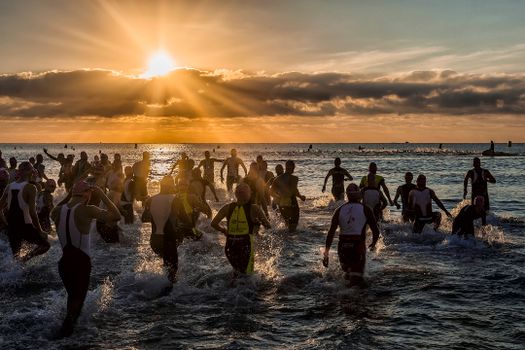
Best Triathlon Wetsuits (2026 Guide): Swim Faster, Transition Quicker
Triathlon-specific wetsuit picks across budget, mid-range, and race-day premium. Full-sleeve and sleeveless options, plus USAT/World Triathlon rules and fit guidance.

Best Wetsuits for Kitesurfing
Best wetsuits for kitesurfing. Wind-and-water exposure picks across temperate and cold-water destinations, with kite-specific considerations.

Best Wetsuits for Windsurfing
Best wetsuits for windsurfing. Wind chill changes the thermal calculation. Picks across temperate and cold-water windsurfing destinations.