
On this page
- Quick picks
- What makes a wetsuit “triathlon-specific”
- Best overall: HUUB Aegis III
- Best race-day: Orca Predator
- Best top-tier: deboer Fjord 1.0
- Best for buoyancy-needing swimmers: Zone3 Vanquish
- Best for strong swimmers: BlueSeventy Helix
- Best mid-range: Roka Maverick Comp II
- Best value: 2XU Propel P:1
- Best budget: SEAC Dolphin 1.5mm
- Rules: thickness, use, and legality
- Comparison table
- How we chose
Triathlon wetsuits are their own category. They share neoprene and thickness conventions with surf and dive suits, but that’s about where the overlap ends. What triathlon suits add: SCS-coated slick outer panels that shed water faster, buoyancy-mapped torso panels that hold your body in a horizontal swimming position, and ultra-flexible shoulders that don’t fatigue over a distance swim. Wearing a tri suit outside its niche is awkward; wearing a surf suit in a triathlon loses you time.
Key Takeaways
- • Race-legal max thickness is 5mm under World Triathlon and USA Triathlon rules.
- • Full-sleeve is warmer; sleeveless has better shoulder range. Match to water temp.
- • Premium suits ($500+) earn their price through buoyancy mapping and SCS coating. Meaningful time savings for competitive racers.
- • Entry-level tri suits ($120–$250) work fine for first-season triathletes and open-water swim training.
Quick picks
| Category | Pick | Price |
|---|---|---|
| Best overall | HUUB Aegis III | $500–$650 |
| Best race-day | Orca Predator | $650–$800 |
| Best top-tier | deboer Fjord 1.0 | $900–$1,100 |
| Best for buoyancy-needing swimmers | Zone3 Vanquish | $450–$600 |
| Best for strong swimmers | BlueSeventy Helix | $600–$750 |
| Best mid-range | Roka Maverick Comp II | $350–$500 |
| Best value | 2XU Propel P:1 | $250–$350 |
| Best budget | SEAC Dolphin 1.5mm | $120–$150 |
For the broader framework, see how to choose a wetsuit. For entry system tradeoffs (triathlon suits are back-zip by convention), see chest zip vs back zip vs zipperless.
What makes a wetsuit “triathlon-specific”
Four features separate tri suits from surf/dive suits:
- SCS-coated outer. The outside of a tri suit has a slick rubberized finish. Super Composite Skin, Nano-SCS, or brand-specific equivalents. Drops water drag noticeably in freestyle swimming.
- Buoyancy-mapped panels. Thicker neoprene in the legs and lower torso (where it lifts your hips) and thinner neoprene in the upper torso and shoulders (where flex matters). Keeps you horizontal without adding overall drag.
- Shoulder flex. The most flexible neoprene available in the shoulder panels. Sometimes down to 1mm. So your stroke isn’t fighting the suit over 1,500m+.
- Quick-release ankles. Ankle cuffs designed to tear off fast during T1 (swim-to-bike transition). Every second matters in a race.
What tri suits sacrifice: durability. SCS coating scratches easily. A triathlon suit treated like a surf suit (dragged across sand, stuffed into a wet bag) will show wear in one season.
Best overall: HUUB Aegis III
HUUB is a British brand founded by Dean Jackson, an ex-competitive swimmer who built the company around the insight that most triathlon suits over-prioritize leg buoyancy for good swimmers (who don’t need it) and under-deliver shoulder flex. The Aegis III splits the difference - 3/3 torso, 1.5mm shoulders, enough leg buoyancy for mid-pack age-groupers without over-lifting strong swimmers. Best overall because it works across swim ability levels.
Best race-day: Orca Predator
Orca is one of the oldest triathlon-specific wetsuit brands (Chilean origin, now globally distributed) and the Predator is their premium race-day offering. Full SCS coating, multi-thickness panel layout with buoyancy mapped to lower torso and thighs, and one of the fastest-swimming profiles in the market. Premium-price, premium-performance. And favored by a lot of mid-pack age-groupers who’ve tried several suits.
Best top-tier: deboer Fjord 1.0
deboer is a newer Dutch brand that has rapidly earned a reputation for the most advanced buoyancy mapping in the market. The Fjord 1.0 is their flagship. Multiple thickness zones (1.5mm, 2mm, 3mm, 4mm, 5mm panels) arranged in specific patterns based on swimmer physiology. Not subtle pricing, but for elite age-groupers and pro-level triathletes, it’s the current benchmark.
Best for buoyancy-needing swimmers: Zone3 Vanquish
Not everyone is a fast swimmer. For age-group triathletes who don’t have a strong swim background. Hips drop, legs sink, stroke fatigues. Extra buoyancy is a real advantage. The Zone3 Vanquish is built specifically for this swimmer profile: 5mm leg panels, 4mm lower torso, Yamamoto #39/#40 construction, and SCS coating. Lifts slower swimmers into a better position without requiring the stroke of a competitive swimmer.
Best for strong swimmers: BlueSeventy Helix
If you have a competitive swimming background, you don’t need heavy buoyancy. You need minimal resistance and maximum stroke range. The BlueSeventy Helix is designed around this use case: lighter torso buoyancy (closer to swimsuit feel), very thin shoulders, and a neck profile that matches faster swimmers’ head position.
Best mid-range: Roka Maverick Comp II
Roka (Austin, Texas) has built a strong following by applying data-driven design to triathlon-specific gear. The Maverick Comp II is their mid-range tri suit. Not cheap, but substantially less than race-day top-tier suits, with real SCS coating and buoyancy mapping. Popular with triathletes stepping up from entry-level but not ready to commit to a $700+ race-day suit.
Best value: 2XU Propel P:1
2XU is best known for compression gear, but their wetsuit line punches above its price. The Propel P:1 is their entry-level full-sleeve. SCS coating on key panels (not full suit), entry-level buoyancy mapping, back-zip with quick-release cord. First-season triathletes and casual age-groupers get real performance at a price that doesn’t sting.
Best budget: SEAC Dolphin 1.5mm
Purpose-built triathlon wetsuits rarely drop under $200. The SEAC Dolphin is the exception. A 1.5mm full-sleeve with buoyancy panels and back-zip entry at a budget price. You give up the SCS coating and advanced buoyancy mapping that premium suits use, but for casual triathletes or open-water swimmers testing the sport, it’s a credible starting point.
Rules: thickness, use, and legality
World Triathlon (formerly ITU) and USA Triathlon both cap wetsuit thickness at 5mm anywhere on the suit for age-group racing. Some elite categories cap lower. Rules do shift. Check current governing-body rules before race day.
Water temperature rules:
- Wetsuit-legal: Below ~78°F / 25.6°C (specifics vary by race and sanctioning body).
- Wetsuit-optional: 78–84°F / 25.6–29°C zones.
- Wetsuit-prohibited: Above ~84°F / 29°C for age-group triathletes.
Comparison table
| Model | Style | Coating | Buoyancy profile | Price |
|---|---|---|---|---|
| HUUB Aegis III | Full-sleeve | Full SCS | Balanced | $500–$650 |
| Orca Predator | Full-sleeve | Full SCS | Race-focused | $650–$800 |
| deboer Fjord 1.0 | Full-sleeve | Full SCS | Multi-zone | $900–$1,100 |
| Zone3 Vanquish | Full-sleeve | Full SCS | High-lift | $450–$600 |
| BlueSeventy Helix | Full-sleeve | Full SCS | Low-drag, strong-swimmer | $600–$750 |
| Roka Maverick Comp II | Full-sleeve | Full SCS | Balanced | $350–$500 |
| 2XU Propel P:1 | Full-sleeve | Partial SCS | Entry-level | $250–$350 |
| SEAC Dolphin 1.5mm | Full-sleeve | None | Basic | $120–$150 |
How we chose
Triathlon wetsuit selection is more nuanced than surf wetsuit selection because swim ability matters as much as the suit. A great suit matched to the wrong swimmer profile underperforms a merely good suit matched correctly. Our criteria:
- Buoyancy appropriate to a range of swim abilities. Not one-size-fits-all.
- SCS coating quality and coverage. The primary drag-reduction feature.
- Shoulder flex over a long swim. Measured at 1500m+ stroke fatigue.
- Quick-release ankles and zipper. Tested in actual T1 simulations.
- Durability vs race-only suits. Some will train in their race suit, some won’t.
Some of these were tested by our team members in triathlon training and race environments. Others were evaluated against those by reviewers familiar with the brand patterns. None were provided by brands. Our editorial policy covers how we handle conflicts.
For open-water swimming outside the triathlon context, most of these suits still work. See the general thickness guide and temperature guide for specifics. For a tuned recommendation based on your water, swim ability, and budget, the Wetsuit Finder includes a triathlon path.
Frequently asked
Do I really need a triathlon-specific wetsuit?
If you race triathlons seriously, yes. Triathlon suits use SCS-coated outer neoprene for reduced water drag, buoyancy-mapped torso panels to hold you in a horizontal swimming position, and ultra-flexible shoulders for unrestricted stroke. A surfing suit is measurably slower in the water and will fatigue your shoulders in distance swims.
What's the thickness limit for race-legal triathlon wetsuits?
World Triathlon (formerly ITU) and USA Triathlon both cap wetsuit thickness at 5mm anywhere on the suit for age-group racing. Most race-day triathlon suits are 3/4mm or 4/5mm configurations. Thick enough in the torso for buoyancy, thin enough in the shoulders for stroke. Check current race rules; they do shift.
Full-sleeve or sleeveless for triathlon?
Water temperature decides. Below about 70°F, full-sleeve retains core warmth enough to make a difference over distance. Above 75°F, sleeveless is faster for most swimmers because shoulder rotation is unrestricted. Between 70 and 75°F, personal preference. Some swimmers are faster with sleeves, some without, and training in both is worthwhile.
Is a high-end triathlon wetsuit really faster?
Measurably, yes. For a competent swimmer. Premium tri suits are typically 15–30 seconds faster per 1000m for a mid-pack age-grouper compared to entry-level suits, largely through buoyancy distribution and lower drag. For casual triathletes or beginners, the gain is smaller and the $800+ price tag harder to justify. The biggest gains come from matching suit to swimmer, not from raw price.
About The WetsuitCenter Team
Our buying guides are written and maintained by staff who actually get cold and wet testing this gear: surfers, divers, and open-water swimmers logging real hours across seasons and water temps.
You might also like
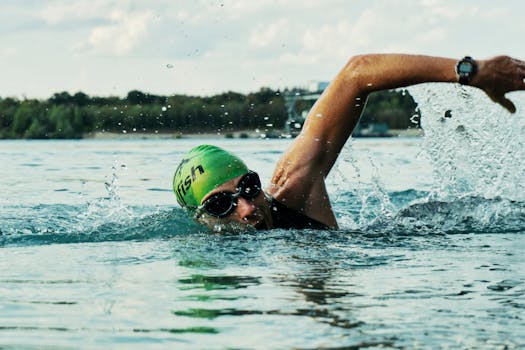
Best Wetsuits for Open-Water Marathon Swimming
Best wetsuits for open-water marathon swimming and long-distance training. Triathlon-grade flex, FINA legality, and picks for 5K to channel-swim distances.
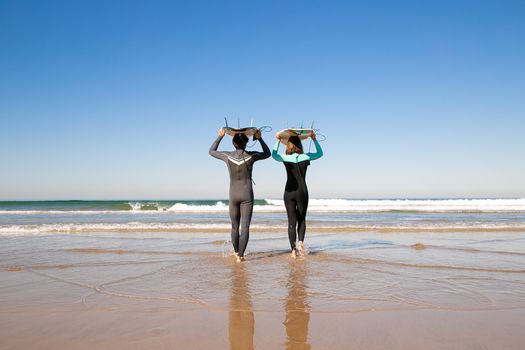
Best Wetsuits for Women (2026 Guide)
Women's-specific wetsuit picks across surfing, triathlon, and cold-water use. Why women's suits matter (not just smaller men's), fit guidance, and 7 reviewed options.
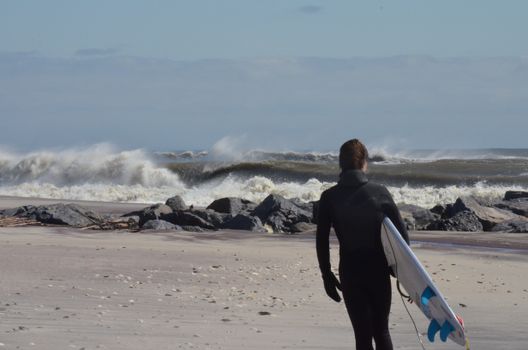
Best Budget Wetsuits Under $150: Quality Without the Sticker Shock
Seven budget wetsuits under $150 that actually deliver. Honest about what you give up at this price. And what you don't need to compromise on.