On this page
- The four decisions that actually matter
- Decision 1: What are you doing in the water?
- Surfing
- Scuba diving
- Triathlon and open-water swimming
- Snorkeling and general water play
- Spearfishing and freediving
- Decision 2: How cold is your water?
- Decision 3: How much should you spend?
- Under $150 (budget)
- $150–$300 (mid-range)
- $300–$500 (premium)
- $500+ (top-tier)
- Decision 4: How often will you use it?
- Entry systems (what the zipper does)
- Back-zip
- Chest-zip
- Zip-free
- Materials: the short version of a long story
- Standard neoprene
- Limestone neoprene
- Yulex and natural rubber
- Linings
- Seams: a quick primer
- Fit basics (the whole game)
- What a good fit looks like
- Red flags
- Common mistakes we see
- Putting it together
Buying a wetsuit is more confusing than it should be. Marketing copy promises “revolutionary” warmth and “ultimate” flex. Retail sites bury the numbers that actually matter under five scrolls of hero imagery. Strangers on Reddit insist their brand is the only one worth owning.
We’re going to cut through that.
Key Takeaways
- • Four decisions drive everything: activity, water temperature, budget, and how often you'll use it.
- • Fit matters more than thickness. A well-fitted 3mm is warmer than a loose 4mm.
- • For most buyers, the $200–$350 "mid-range" tier is the sweet spot. Meaningful quality without diminishing returns.
- • The number on the tag (3/2mm, 4/3mm) is a thickness map, not a single value. More on that below.
There are really only four decisions you need to make. Get those right and the specific brand matters less than most buyers think. Get them wrong and even a $600 premium suit will feel like a bad purchase.
The four decisions that actually matter
Before you look at a single product page, answer these:
- What will you do in this suit? Surfing has different demands than diving. A triathlon suit built for water-shedding will feel strange paddling into waves.
- What water temperature do you spend most time in? This drives thickness. It’s the single biggest variable.
- What’s your budget? Not what you’d like to spend. What you’ll actually commit. The entire market is stratified by price tier.
- How often will you use it? A casual once-a-month paddler and a five-days-a-week surfer should not buy the same suit, even if they’re the same size.
The rest of this guide walks through each decision, then covers the supporting details. Entry systems, materials, seams, fit, and the mistakes we see most often.
If you’d rather skip the reading and answer a short questionnaire, our Wetsuit Finder tool takes you through the same logic in about 60 seconds.
Decision 1: What are you doing in the water?
Wetsuits are built around the physics of a specific activity. The good ones are ruthless about it.
Surfing
Surfing demands shoulder flexibility above all else. You paddle a lot, and a stiff suit fights you every stroke. Surfing suits use the most flexible neoprene in the shoulders and chest, often at the cost of thickness in those panels. They also tend to have reinforced knee pads because you’re kneeling on a board for half the session.
If surfing is your primary use, read our best surfing wetsuits guide next. If you’re buying your first surf suit, the best wetsuits for beginners list is a better starting point. Entry-level suits with enough flex and warmth to learn in, without the premium price.
Scuba diving
Diving suits are thicker, tougher, and usually have back-zip entry for convenience with a tank pad. The neoprene is denser and more abrasion-resistant because you’re descending past rocks, kelp, and reef. Dive suits are measurably stiffer than surf suits of the same thickness. That’s a feature, not a bug. You’re not paddling, and the denser neoprene holds warmth better at depth, where every foot of descent compresses the cells and reduces insulation.
Triathlon and open-water swimming
Triathlon suits are the most specialized category on this list. They use SCS-coated outer neoprene that sheds water fast, buoyancy panels in the legs and core to hold you in a horizontal swimming position, and extra-flexible shoulders to avoid fatiguing your stroke. They are not built for surfing or diving. Wearing one outside its niche is like wearing running flats to a basketball game.
Snorkeling and general water play
For snorkeling, kayaking, paddleboarding, or “I spend a lot of time near cold water and occasionally jump in,” you have the most freedom. A 3/2mm back-zip full suit or a 2mm shorty covers you across most scenarios. Warmth matters more than sport-specific flex, and you can buy last year’s model without losing anything meaningful.
Spearfishing and freediving
Freediving suits are a world of their own. Usually two-piece, made of open-cell neoprene that bonds to your skin for maximum warmth, and camo-patterned. They’re not interchangeable with other suits and usually require lubrication (diluted soap or conditioner) just to get them on.
Decision 2: How cold is your water?
Water temperature drives thickness more than any other single variable. Here’s the short version, with caveats to follow:
| Water temperature | Typical recommendation |
|---|---|
| 75°F+ (24°C+) | Rashguard or 1–2mm shorty |
| 68–75°F (20–24°C) | 2mm full or shorty |
| 62–68°F (17–20°C) | 2mm or 3/2mm full suit |
| 56–62°F (13–17°C) | 3/2mm full suit |
| 50–56°F (10–13°C) | 4/3mm full suit + booties |
| 44–50°F (7–10°C) | 5/4mm + hood, boots, gloves |
| Below 44°F (7°C) | 6/5mm hooded suit or drysuit territory |
Our wetsuit temperature guide goes deeper on each band, including regional examples and the adjustments for wind and session length. For the quickest lookup, the interactive temperature chart lets you drag a slider and factor in your personal tolerance.
A few caveats to the table:
- Wind matters as much as water. A 60°F day with 20-knot offshore wind feels colder in a 3/2 than a 55°F glassy morning.
- Session length matters. A 3/2mm that’s fine for an hour can feel miserable on a three-hour dawn patrol.
- Some people just run cold. Low body fat, recent illness, dehydration, or sensitivity all push you one zone colder.
- The suit’s construction matters. A premium 3/2mm with sealed seams and a thermal lining will outperform a budget 4/3mm with flatlock seams.
Thickness is conventionally written as two numbers. 3/2mm, 4/3mm, 5/4mm. The first number is the torso, the second is the limbs. We explain why suits are built this way in our wetsuit thickness guide.
Decision 3: How much should you spend?
Wetsuit pricing is cleanly tiered. Here’s roughly what you get at each level:
Under $150 (budget)
First-suit territory. Expect flatlock or glued seams, entry-level neoprene that won’t stretch much, and a back-zip entry that flushes a bit more water than chest-zip designs. These are perfectly fine for learning, occasional use, or as a backup. They won’t last if you use them hard.
$150–$300 (mid-range)
This is where most buyers should live. You get glued-and-blind-stitched (GBS) seams, reasonably stretchy neoprene, and durable construction. A well-cared-for mid-range suit will serve a regular user for two to three seasons. Our best budget wetsuits guide covers this band.
$300–$500 (premium)
Premium neoprene (Yamamoto #39/#40, Limestone Super-Stretch, or equivalent), liquid-taped or fully taped seams, thermal linings, and chest-zip or zip-free entry. For a regular user, these suits feel dramatically different. Lighter, warmer, more flexible. The jump from mid-range to premium is the most noticeable upgrade in the entire market.
$500+ (top-tier)
At this point you’re paying for marginal gains. The best in this band uses premium neoprene across the whole suit (not just the panels), bonded seams instead of stitched, and proprietary linings. Worth it if you surf or dive several times a week in cold water. Diminishing returns otherwise.
Decision 4: How often will you use it?
This is the lever most buyers forget. Usage frequency changes which tier makes sense:
- A few times a year: Budget or mid-range. A premium suit will outlast you by decades but you’ll also never notice its advantages.
- Weekly: Mid-range. You’ll wear it in and appreciate the quality without overpaying.
- Several times a week: Premium. The flex and warmth compound over hundreds of sessions.
- Daily or near-daily: Top-tier, and budget to replace it every 18–24 months. At this usage rate the neoprene compresses faster than anything else breaks.
Entry systems (what the zipper does)
How you get into the suit matters more than most buyers realize. Three main designs:
Back-zip
The classic design. A vertical zipper down your spine with a long leash to close it. Back-zips are easy to get into, which is why most beginner suits use them. The downside is that the zipper is a long seam down the coldest part of your back, and under duck-dives or diving descents, water flushes through it quickly. For most uses you won’t notice. For cold-water surfing, you will.
Chest-zip
A horizontal or diagonal zipper across the chest, entered through a wide neck opening that folds down. Chest-zips flush dramatically less water because the seam is away from flush zones. They’re slightly harder to get into and require a specific technique (head through the neck bib first, then arms). Worth the learning curve if you’re serious about staying warm.
Zip-free
A few premium surf suits use no zipper at all. You enter through a stretch-neck opening that closes behind your head with a hook. The warmest, most flush-resistant option. Also the hardest to take off, especially when you’re tired. Rare outside premium surfing suits.
Materials: the short version of a long story
Neoprene is a foam rubber developed by DuPont in the 1930s. All wetsuit materials trace back to it, with variations in source material, cell structure, and surface treatment. For a deeper breakdown, see our neoprene vs Yulex explainer.
Standard neoprene
Petroleum-derived, historically the norm. Good warmth-to-weight, moderate flex, cheap to produce. Most budget and mid-range suits use it.
Limestone neoprene
Still petroleum-dependent at the process level but uses calcium carbonate (limestone) as a raw material source. The cell structure is finer, which translates to better stretch and slightly better warmth per mm. Sometimes marketed as “eco”. It’s marginally better than standard, but not as big a difference as the marketing suggests.
Yulex and natural rubber
Plant-derived rubber from the hevea tree. Used most prominently by Patagonia. Warmth is competitive with standard neoprene; durability is comparable; the environmental case is significantly stronger. The price premium is real but shrinking as production scales.
Linings
What’s on the inside of the suit matters almost as much as what it’s made of. Premium suits use a thermal plush lining on the torso that traps a layer of warm air against your skin. Budget suits are bare neoprene on the inside. Colder and slower to warm back up when water flushes through.
Seams: a quick primer
- Flatlock: Two panels sewn together flat. Flexible, durable, and leaky. Fine for water above 68°F.
- GBS (glued and blind-stitched): Panels glued, then stitched part-way through from one side. Much more watertight than flatlock. The standard for 3/2mm and 4/3mm suits.
- Sealed / liquid-taped: GBS seams covered with a liquid rubber seal on the inside or outside. Almost watertight. Necessary for cold water.
- Bonded: Panels glued with no stitching. Maximum stretch, minimum water entry. Found on premium suits.
Our wetsuit seams explained guide has the full breakdown with pictures and failure modes.
Fit basics (the whole game)
Thickness and material mean nothing if the suit doesn’t fit. Water pooling in gaps is what makes you cold, not the neoprene itself.
What a good fit looks like
A wetsuit should feel like a firm handshake, all over. Snug across the chest and back, no bagginess in the lower spine, no pooling fabric behind the knees. You should be able to reach overhead without the suit yanking at your shoulders. When you squat down, the material should stretch, not bind. The neck should be close enough that water doesn’t rush in when you tilt your head, but not so tight that it chafes.
A detailed walkthrough with common problem areas lives in our fit guide. If you want a brand-specific recommendation for your measurements, try the size calculator.
Red flags
- Pooling in the lower back. The suit is too long through the torso. Water floods in when you duck-dive.
- Gapping at the neck. Constant flushing. A dealbreaker in cold water.
- Shoulders pulling during paddling. The suit is too tight in the chest or too short in the torso.
- Loose at the ankles or wrists. Cold water enters there in volume.
- Bunching behind the knees. The suit is too long in the leg; you’ll hate it on day two.
Common mistakes we see
Buying purely on price. A $99 suit that doesn’t fit will make you miserable and you’ll replace it in a season. A $250 suit that fits will outlast two $99 suits.
Ignoring the “2” in “3/2”. That’s the limb thickness. A 3/3 is warmer than a 3/2. A 4/3 has less shoulder flex than a 3/2 even though the torso is thicker. Read the second number.
Sizing up for comfort. Cold water will teach you within one session why wetsuits are supposed to feel snug on land. If the suit feels loose on the beach, it will feel like a slow-flushing bathtub in the water.
Skipping accessories. Below 55°F, booties matter. Below 50°F, booties + hood matter. Below 45°F, booties + hood + gloves are non-negotiable. Spending $400 on a perfect 4/3 while your feet freeze is not the move.
Not maintaining it. A great suit treated badly becomes a junk suit in six months. Our wetsuit care guide covers the short list of habits that meaningfully extend suit life.
Buying for a use case you don’t actually do. People buy cold-water surf suits for their one trip to Oregon and end up wearing it once. If you surf 80% of sessions in 65°F water, buy for that, not for the outlier.
Putting it together
If you remember nothing else from this guide, remember the order of operations:
- Activity. What are you doing most of the time?
- Water temp. What’s your usual water range?
- Budget. What tier fits your real spend, not your wish?
- Frequency. How often will you actually use it?
Then fit. Then accessories. Brand comes last. Within a price tier, the good brands are more alike than different.
If you want a shortcut through all of this, run the Wetsuit Finder tool. Five questions, tuned recommendation, and links to the specific buying guides that match your answers. Surfing often enough that you need more than one suit? The Quiver Builder tool maps a one to four suit setup based on your region and frequency. Or browse the full list of brand profiles if you’d rather start from the brand side.
Whatever you buy, get the fit right first. Everything else is tuning.
Frequently asked
Do I really need a wetsuit for 70°F water?
For most people, yes. At least a shorty or 2mm top. 70°F feels warm for the first twenty minutes, then cold. If you're surfing or paddling for more than an hour, even tropical-looking water will sap your core temperature faster than you expect.
How long does a wetsuit last?
A well-made, well-cared-for 3/2mm surfed several times a week typically lasts 2–3 years before the neoprene compresses enough to noticeably lose warmth. A thicker, less-used suit can last 5+ years. Rinsing in fresh water, drying out of direct sun, and not wadding it up in a bag doubles its life.
Should I buy a used wetsuit?
Sometimes. But check for stretch-out in the torso and knees, fishy smell that won't rinse out, cracked seams, and rips near the zipper. A used suit from someone's second closet is often fine. A used suit from someone who surfed it five days a week for two years is usually cooked.
Can one wetsuit work for multiple activities?
A 3/2mm full suit covers a surprising range. Casual surfing, snorkeling, kayaking, easy freedives. The compromises show up at the extremes: a surf suit has less buoyancy than you want for triathlon, a triathlon suit has less shoulder durability for surfing, and dive-specific suits add abrasion resistance you don't need otherwise. If you do one thing 80% of the time, buy for that.
About The WetsuitCenter Team
Our educational articles are reviewed by longtime surfers, divers, and open-water swimmers on staff. We cross-check technical claims against manufacturer specs and published research.
You might also like
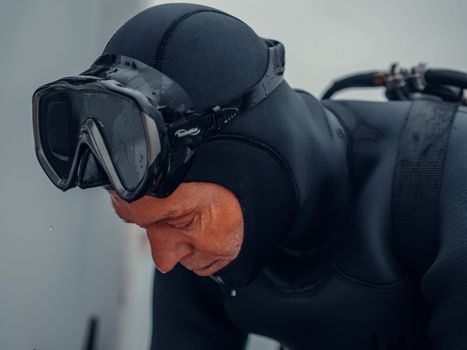
Wetsuit Thickness Guide: What Do the Numbers Mean?
The real meaning of 3/2mm, 4/3mm, and 5/4mm wetsuit labels. How thickness distribution works, why it matters, and how to pick the right combination for your water.
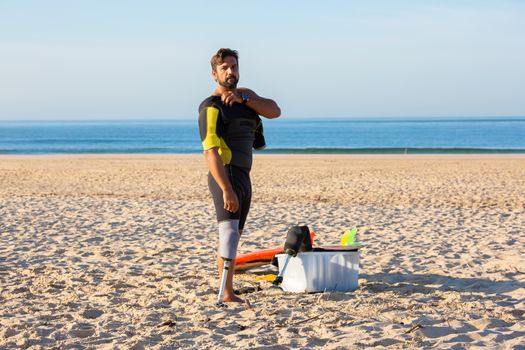
How Should a Wetsuit Fit? A Visual Guide
What a properly-fitting wetsuit looks and feels like, the red flags of a bad fit, and a zone-by-zone walkthrough of where to check before you commit to a size.
Wetsuit Temperature Guide: What Thickness for Your Water Temp?
Water temperature to wetsuit thickness, band by band, with regional examples from SoCal to the North Sea, plus how wind and session length shift things.