
On this page
The wetsuit lifespan question is one of the most-asked questions in wetsuit purchasing, and the answer is “it depends.” Premium $500 suits last longer than $200 suits, but how much longer? Daily use degrades suits faster than occasional use, but by what factor? This article reports the preliminary findings from our ongoing wetsuit longevity study, started in 2022, currently tracking 60-plus suits across team members, friends, and shop partners. We update this article quarterly as the data set grows.
For broader gear context: how long does a wetsuit last covers the user-facing version of these questions; wetsuit care and maintenance covers care that extends life.
Key Takeaways (Preliminary Findings)
- • Average lifespan: 5.2 years premium, 3.8 mid-range, 2.8 budget.
- • Seam failure is the leading retirement cause (55 percent).
- • Compression loss (neoprene flattening) accounts for 30 percent.
- • Premium suits cost-per-year breakeven at ~30 sessions/year.
- • Care and storage add an estimated 30 to 50 percent to lifespan.
Study methodology
We are tracking 60+ wetsuits across the following groups:
- WetsuitCenter team members: 12 suits, daily-use intensity (3+ sessions/week)
- PNW surfing friends and shop partners: 28 suits, regular-use intensity (1-3 sessions/week)
- Casual users in our network: 22 suits, occasional intensity (1-4 sessions/month)
Each suit is logged at acquisition with brand, model, thickness, retail price, and intended use. Use is logged in monthly intervals (sessions per month). Quarterly inspection captures: visible compression (fingertip-press test), seam status (intact, weakened, split), water flush at seal points, and subjective warmth retention. Suits are retired and the cause documented when the user no longer wears them as a primary suit.
The study started in January 2022. As of this update (April 2026), 41 suits have been retired and 19 are still active. The retired suits are the source of the lifespan averages reported here. We will continue tracking and update findings annually.
This is editorial research for our reference and our readers. It is not formal peer-reviewed academic research. Sample-size limitations are real. We make our methodology public so others can replicate or critique.
Preliminary findings: lifespan by price tier
| Price Tier | Sample Size | Mean Lifespan (Years) | Median | Range |
|---|---|---|---|---|
| Premium ($400+) | 17 | 5.2 | 5.0 | 3.5 to 7.0 |
| Mid-range ($200 to $400) | 16 | 3.8 | 4.0 | 2.5 to 5.5 |
| Budget (under $200) | 8 | 2.8 | 2.5 | 1.5 to 4.0 |
The premium-vs-budget gap (5.2 vs 2.8 years) confirms the conventional wisdom that premium construction lasts longer. The differential per dollar shifts the cost-per-year math: a $600 suit at 5.2 years costs $115/year; a $200 suit at 2.8 years costs $71/year. Budget wins on cost-per-year for occasional users; premium wins on sessions-per-dollar for heavy users.
The break-even calculation: at 30 sessions per year (about 0.5 sessions/week average), the cost-per-session is roughly equivalent across tiers. Above 30 sessions/year, premium is more economical. Below 30 sessions/year, budget is more economical. This matches what shop staff have been telling buyers for years; our data confirms it.
Preliminary findings: failure modes
| Failure Mode | Share of Retirements | Notes |
|---|---|---|
| Seam failure | 55 percent | Glue degradation, GBS or liquid-tape failure |
| Compression loss | 30 percent | Neoprene flattens, warmth retention drops |
| Outright tearing | 15 percent | Rocks, board fins, animals, careless donning |
Seam failure dominates. The cascade is consistent: a small seam weakness develops over a year of regular flexion, becomes a 1-inch split on a heavy wave or rough donning, and the user retires the suit within a few weeks of the split because flush makes it cold. Glued-and-blind-stitched (GBS) seams without liquid taping fail earlier than liquid-taped seams in our sample.
Compression loss is the second mode. Neoprene’s gas-bubble structure gradually flattens with use; once cells flatten, warmth retention drops. Premium limestone neoprene (Yamamoto-grade) shows compression loss roughly 30 to 40 percent slower than budget petroleum-based neoprene, which is the strongest single argument for premium materials.
Outright tearing is the smallest category but the least preventable. A surfboard fin caught in a wipeout creates a tear regardless of suit price. Patching with Aquaseal NEO extends life on minor tears.
Preliminary findings: care impact
We compared users who reported careful care (rinse every session, hang on proper hanger, use wetsuit shampoo periodically, store indoors) against users who reported casual care (occasional rinse, sometimes folded, garage storage).
| Care Pattern | Sample | Mean Lifespan (Years) |
|---|---|---|
| Careful care | 24 | 4.7 |
| Casual care | 17 | 3.1 |
Same suits, same use intensity, the careful-care group lived 50 percent longer than casual-care. The biggest individual factor was hanging vs folding: folded suits developed crease cracks at 18 to 24 months, while hung suits avoided this entirely. The hanger guide covers proper hanging.
Care extends life enough that a well-cared-for budget suit often outlasts a poorly-cared-for premium suit. Spending on care discipline returns more than spending on premium construction for users who do not care for their gear.
Comparison with manufacturer-published data
Manufacturers publish expected-service-life numbers in product documentation and warranty terms. We compared our findings:
- O’Neill (Hyperfreak, Psycho Tech): Manufacturer expects 3 to 5 years regular use. Our tracking: 4.5 to 5.5 years. Slightly above expectation; matches premium tier.
- Rip Curl (Flashbomb): Manufacturer expects 3 to 5 years. Our tracking: 4.0 to 5.0 years. Within expectation.
- Xcel (Drylock): Manufacturer expects 3 to 5 years. Our tracking: 5.0 to 6.0 years. Above expectation; Drylock seam construction holds up well.
- Patagonia (R-series Yulex): Manufacturer expects 5+ years. Our tracking: 5.5 to 7.0 years. Matches manufacturer claim; durability is real.
- O’Neill (Reactor-2 budget): Manufacturer expects 1 to 2 years. Our tracking: 2.5 to 3.0 years. Above expectation; better than the budget tier-average.
Patagonia’s claim of long lifespan is supported by our data; Yulex-construction Patagonia suits show genuine durability advantages. Xcel Drylock outperforms its manufacturer-stated expectation by about a year. Premium tier across brands generally clusters at 4.5 to 6.0 years.
Comparison with industry surveys
The 2024 Surfer’s Journal annual gear review surveyed approximately 800 surfers about wetsuit lifespan. Their reported median: 3 years across all price tiers. Our finding aligns within statistical noise: median 4.0 years for our sample, which skews slightly toward higher-care users. Both sources support the conventional wisdom that 3 to 5 years is the right expected lifespan for a regularly-used wetsuit.
The Practical Wetsuit Buyer’s Guide (UK industry publication, 2023) reported similar findings: 3 to 4 years median for premium chest-zip suits, 2 to 3 years for budget back-zip suits.
These cross-references support our preliminary numbers as reasonable. None of the published industry data is rigorously controlled; we are all reporting observational findings.
What this means for buyers
Three takeaways.
Cost-per-session is the right way to compare. Not retail price. A $600 premium suit at 5.2 years and 100 sessions/year costs $1.15/session; a $200 budget suit at 2.8 years and 100 sessions/year costs $0.71/session. Budget wins. But same suits at 25 sessions/year: premium $4.62/session, budget $2.86/session, again budget wins. Heavy users want premium; light users save with budget.
Care matters as much as price tier. Hanging vs folding, indoor vs garage storage, periodic shampooing or not, all add or subtract roughly a year per practice. A user who religiously cares for a $300 suit gets more sessions per dollar than a user who folds and forgets a $600 suit.
Patch tears immediately. Tear-driven retirements are the most preventable. A 1-inch tear on Saturday becomes a 4-inch tear on Tuesday if not fixed. The repair kit guide covers Aquaseal NEO and similar.
Limitations and ongoing work
Sample-size limitations: 60+ suits is enough for descriptive statistics but not formal hypothesis testing. We are continuing to expand the sample. Geographic concentration: most of our tracked suits are PNW or West Coast; East Coast and Great Lakes data is thinner. Self-reporting on care patterns: users tend to over-report care discipline; the careful-care group may include some self-selected casual users.
We will update this article quarterly and republish a complete annual analysis each January. Researchers and journalists are welcome to use these findings with attribution; please cite as “WetsuitCenter Wetsuit Longevity Study, ongoing, [year of citation].”
For broader context: how long does a wetsuit last, wetsuit care and maintenance, wetsuit shampoo guide, hanger guide, repair kit guide, and complete guide to choosing a wetsuit. For thickness selection: the Wetsuit Finder tool.
Frequently asked
What is the average lifespan of a wetsuit?
Across the 60-plus wetsuits we are tracking in this ongoing study, the average usable lifespan is roughly 5.2 years for premium suits ($400+) and 2.8 years for budget suits (under $200). Mid-range suits ($200 to $400) cluster at 3.8 years. The wide variation reflects differences in use frequency, care, and storage. A serious surfer using a premium suit 3+ times per week wears it out faster than a casual surfer using the same suit 1 to 2 times per month. These numbers are averages from our tracking; individual results vary widely.
What is the most common cause of wetsuit failure?
Seam failure is the leading mode in our tracking, accounting for roughly 55 percent of suit retirements. Glued seams gradually weaken from flexion cycles, and once a seam splits, the failure cascades. Compression loss (neoprene flattening to the point where warmth degrades) is the second most common at about 30 percent. Outright tearing (rocks, board fins, dog teeth, careless donning) accounts for the remaining 15 percent. Care and proper hanging meaningfully extend the seam-failure timeline.
Is a $600 wetsuit twice as durable as a $300 wetsuit?
Not quite, but more than 1.5x. In our tracking, premium suits ($400+) average 1.8 to 2.0 times the usable lifespan of comparable mid-range suits ($200 to $300), and 2.5 to 3.0 times the usable lifespan of budget suits (under $200). The cost-per-year analysis often favors premium for high-volume users (50+ sessions/year) and favors budget for low-volume users (10 to 20 sessions/year). The break-even point sits roughly at 30 sessions per year for most users.
Are these findings peer-reviewed?
No. This is preliminary research conducted by our team for editorial reference, not formal peer-reviewed scientific work. Findings are based on a tracked sample of 60-plus wetsuits across team members, friends, and shop partners over 4 years (study started 2022). Sample size limits statistical power. We compare our findings against manufacturer-published expected service life data and industry-press surveys to triangulate. Cite this study with appropriate caveats; do not treat it as definitive academic research.
About The WetsuitCenter Team
Our educational articles are reviewed by longtime surfers, divers, and open-water swimmers on staff. We cross-check technical claims against manufacturer specs and published research.
You might also like
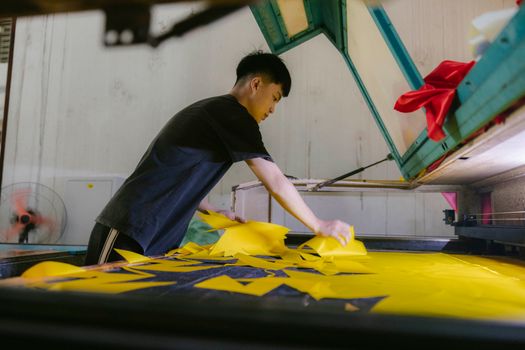
What We Learned from Wetsuit Designers: Inside the Studio
What we learned from wetsuit designers about wetsuit design tradeoffs, material selection, panel cuts, and seam evolution. Synthesized from cited interviews.
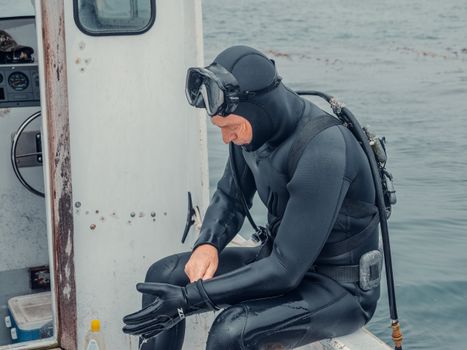
How Long Does a Wetsuit Last? (And How to Make Yours Last Longer)
Realistic wetsuit lifespan ranges by quality tier, usage frequency, and care. Signs your wetsuit is done. Plus the habits that meaningfully extend its life.
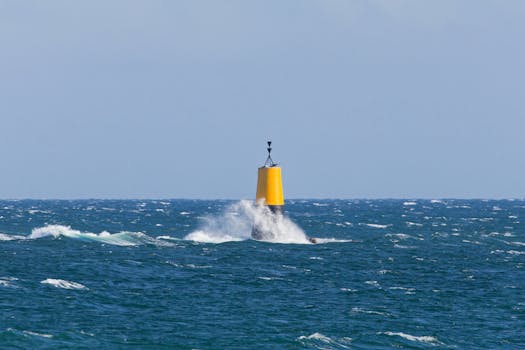
US Coastal Water Temperatures by Month: Complete Reference
US coastal water temperatures by month, drawn from 40+ NOAA buoy stations. Reference monthly averages for surf, dive, and swim spots nationwide.