
On this page
- Great Lakes water temperature reality
- The Great Lakes seasonal pattern
- Quick picks
- Best winter wetsuit (pre-drysuit transition): O’Neill Psycho Tech 5/4 Hooded
- Best fall / spring shoulder: Rip Curl Flashbomb Heatseeker 5/3 Hooded
- Best 4/3 for fall storms: O’Neill Hyperfreak with separate hood
- Best summer 3/2: Rip Curl Flashbomb 3/2
- Best budget shoulder: Need Essentials 4/3
- Where wetsuits stop and drysuits begin
- Spot-by-spot context (researched)
- Cold-water accessories
- How we tested
- Putting it together
- Sources cited
A note up front: our team is based in Portland, Oregon and surfs the Pacific Northwest year-round. We have not personally surfed the Great Lakes. This guide is built from NDBC buoy data, NOAA Great Lakes Coast Watch product references, the published consensus of Great Lakes surf shops and regulars, and our broader cold-water gear knowledge. Where the gear answer transfers cleanly from PNW experience, we say so. Where Great Lakes specifics differ (winter freezes, shorter buoy season, drysuit crossover), we flag it.
For firsthand cold-water context, our Pacific Northwest pillar is the right entry point.
Key Takeaways
- • Great Lakes water has the widest seasonal range of any US surf region: from just above freezing in winter to 70°F+ in summer.
- • Many regulars choose drysuits over wetsuits for genuine winter sessions in sub-40°F water.
- • Wetsuits cover the shoulder seasons well: 4/3 hooded for fall and spring, 5/4 hooded for early-winter and late-spring transitions.
- • Summer Great Lakes water rivals the warmth of Southern California in August.
Great Lakes water temperature reality
NDBC buoys in the Great Lakes are seasonal. They are deployed in spring and pulled before ice formation each fall. The published climatic summary for NDBC 45007 (Lake Michigan, south basin) covers March through December only.
| Station | Location | Coldest reported month | Warmest month | Annual mean (Mar–Dec) |
|---|---|---|---|---|
| NDBC 45007 | Lake Michigan south basin (1981–2008) | Mar / Apr: 37.8°F | Aug: 71.1°F | 55.0°F |
The “Annual mean” for 45007 reflects March through December only because January and February data are not collected. True annual means including ice-month water are lower.
For Lake Erie and Lake Ontario data, NDBC has fewer accessible climatic summaries; surface temperature data is best accessed through NOAA Great Lakes Coast Watch (a satellite-derived gridded SST product). General regional patterns from the published research and Coast Watch products:
- Lake Superior runs colder year-round than the lower Great Lakes; the south shore (Marquette, Munising) sees summer peaks in the high 50s°F to low 60s°F.
- Lake Erie is the shallowest Great Lake and warms fastest; summer surface temperatures regularly hit 75°F in the central basin. Winter cold and ice formation are also fastest here.
- Lake Ontario is intermediate, with deeper water than Erie but more thermal inertia than Superior.
For more on how thickness maps to water temperature, see our thickness guide and the interactive temperature chart.
The Great Lakes seasonal pattern
The published consensus from Great Lakes surf communities:
- Late June through September is summer surfing. Lake Michigan averages 19.2°C (66.6°F) in July and 21.7°C (71.1°F) in August in the published 1981 to 2008 climatology. Surfers wear 3/2s; many wear no wetsuit for shorter sessions in August. Genuine warm-water surfing.
- September through October is the shoulder window where wave quality picks up but water is still in the 50s°F to low 60s°F. 4/3 with separate hood is reasonable.
- November through December is when Great Lakes surfing gets serious. Storm systems generate the best swell of the year, water cools fast (Lake Michigan averages 56.5°F in October, 48.4°F in November, 43.5°F in December). 5/4 hooded becomes the default; some regulars switch to drysuits as November ends.
- January through March is the deep winter window. Buoys offline, lake-effect storms generate the largest swells, ice forms along protected shores. Most regulars in this window are in drysuits, not wetsuits. Surfing happens in narrow weather windows between storms.
- April through May is the warming-back window. Water in the high 30s°F to low 50s°F. 5/4 hooded as the lake transitions, then 4/3 hooded once water clears 50°F.
- June transitions fast. Lake Michigan averages 11.2°C (52.2°F) in June, then leaps to 66.6°F in July.
This seasonal range is unique. No other US surf region sees water move from near-freezing to mid-70s°F across the calendar.
Quick picks
| Category | Pick | Price |
|---|---|---|
| Best winter wetsuit (pre-drysuit transition) | O’Neill Psycho Tech 5/4 Hooded | $550–$650 |
| Best fall / spring shoulder | Rip Curl Flashbomb Heatseeker 5/3 Hooded | $500–$600 |
| Best 4/3 for fall storms | O’Neill Hyperfreak 4/3 with hood | $260–$320 |
| Best summer 3/2 | Rip Curl Flashbomb 3/2 | $400–$475 |
| Best budget shoulder | Need Essentials 4/3 | $170–$200 |
| Best fast-dry for trips | Rip Curl Flashbomb Heatseeker 5/3 | $500–$600 |
Best winter wetsuit (pre-drysuit transition): O’Neill Psycho Tech 5/4 Hooded
For Great Lakes regulars who stick with wetsuits in November and December (and into early January in milder years), the Psycho Tech is the pick most often referenced in regional surf shop discussions. Firewall Pro thermal lining, Fluid Seam Weld construction, integrated hood. It will keep you warm for 60 to 75 minutes in 40°F water. Below 40°F, most regulars switch to drysuits regardless of which wetsuit they own.
Best fall / spring shoulder: Rip Curl Flashbomb Heatseeker 5/3 Hooded
Great Lakes surfers often chase storms across multiple lakes in the same trip; Cleveland on Saturday, Buffalo or Sheboygan on Sunday. The Flashbomb Heatseeker’s Flash Lining handles the back-to-back use better than any other suit in this list. Faster drying overnight in a hotel room or truck cab.
Best 4/3 for fall storms: O’Neill Hyperfreak with separate hood
October and November Great Lakes storms produce the best surf of the year for many regulars. Water still in the 40s to low 50s°F. A premium 4/3 with separate hood is the right answer. The Hyperfreak with a 3mm hood worn underneath is a flexible setup; you remove the hood for warmer pulses and keep it on for the cold weeks of late November.
Best summer 3/2: Rip Curl Flashbomb 3/2
Great Lakes summer is genuine warm-water surfing. A premium 3/2 is the right answer when water hits the upper 60s°F or low 70s°F. The standard Flashbomb (without the Heatseeker hood) is what most regulars seem to wear in this window.
Best budget shoulder: Need Essentials 4/3
For Great Lakes surfers building a shoulder-season kit on a budget, the Need Essentials 4/3 is the sub-$200 option that holds up. GBS construction with partial inside taping. Less warmth than premium suits but legitimate 4/3 capability.
Where wetsuits stop and drysuits begin
A practical note for Great Lakes winter that does not apply to most other US surf zones: at some point in the cold cycle, a wetsuit stops being the right choice. The published consensus in Great Lakes surf communities puts that crossover roughly at 38 to 40°F water for sessions over 60 minutes. Below that, a drysuit with appropriate undergarments stays warmer longer and lets you surf the storms that produce the best Great Lakes waves.
We do not write a drysuit guide here because that is its own category outside the wetsuit market. If you are committing to year-round Great Lakes surfing, plan to add a drysuit to your kit alongside your 5/4 hooded wetsuit. The wetsuit covers the long shoulder seasons; the drysuit covers the deep-winter storm window.
Spot-by-spot context (researched)
These are the spots most often referenced in Great Lakes surf community discussions. We have not surfed them.
Sheboygan, WI (Lake Michigan). A widely-cited Lake Michigan surf town with multiple breaks and an active community. Storm-driven surf in fall and winter; flat in summer.
Ludington, MI and Saint Joseph, MI (Lake Michigan). Beach breaks with seasonal waves. Better in fall storms.
Marquette, MI (Lake Superior, south shore). Lake Superior surf zone with a real winter community. Coldest water in the lakes; drysuit-heavy local kit.
Cleveland, OH and Buffalo, NY (Lake Erie). Lake Erie’s shallow water warms and cools fastest. Storms produce real waves but conditions are unpredictable.
Toronto and Niagara region (Lake Ontario). Smaller surf community. Water sits between Erie and Superior in seasonal range.
We are working from research only on these spots. For fellow PNW surfers planning a Great Lakes trip, the gear-answer transfer is: wetsuits for shoulder seasons (October to early December and April to May), drysuit for winter, full-thickness summer suit for July through August.
Cold-water accessories
For wetsuit-window Great Lakes surfing (fall and spring shoulders):
Boots. 5mm round-toe in fall; 7mm in late November and spring. O'Neill Heat 5mm for shoulder months; Xcel Drylock 7mm for the cold edge.
Gloves. 5mm gloves in shoulder months. Rip Curl Flashbomb 5mm . For November storms, mittens are warmer: O'Neill Psycho Tech 7mm mitten .
Hood. A 3mm hood is a year-round shoulder-season accessory. Xcel Drylock 3mm hood seals well under most surf-suit collars.
For broader accessory picks, see best cold-water wetsuits.
How we tested
Important context: we have not surfed the Great Lakes. This article compiles NDBC buoy climatic summaries, NOAA Great Lakes Coast Watch product references, the published consensus of Great Lakes surf shops, and trip reports from regulars. Where the gear answer transfers cleanly from PNW knowledge, we have applied it. Where Great Lakes specifics differ (notably the drysuit crossover, the seasonal buoy gaps, and the wider seasonal range), we have flagged it.
This is research-based, not hands-on. As we get hands-on time on the lakes or expand our team to include Great Lakes regulars, we will update this article. Our methodology page covers how we distinguish hands-on review from research-based assessment.
Putting it together
For Great Lakes surfing across the year: a 3/2 for summer (Flashbomb), a 4/3 with hood for fall and spring shoulders (Hyperfreak), a 5/4 hooded for early-winter and late-spring transitions (Psycho Tech or Flashbomb Heatseeker), and ideally a drysuit for the deep-winter storm window. Add 5mm to 7mm boots, 5mm gloves or 7mm mittens, and a separate hood if your primary suit is non-hooded. The Quiver Builder tool covers the Great Lakes multi-suit setup in one pass.
For broader cold-water context that does come from firsthand experience, see the Pacific Northwest pillar, Oregon coast guide, and Washington coast guide.
Sources cited
- NDBC Station 45007 (Lake Michigan south basin) climatic summary, 07/1981–11/2008. ndbc.noaa.gov/data/climatic/45007.txt
- NOAA Great Lakes Coast Watch satellite SST product. coastwatch.glerl.noaa.gov
Frequently asked
How cold do the Great Lakes get?
Cold enough that nearshore water can freeze. The published climatology for NDBC 45007 (Lake Michigan, south basin) does not include January and February data because the buoy is pulled before ice formation each year. Surface water temperatures in winter Great Lakes surfing can sit just above the freshwater freezing point of 32°F, with ice formation possible along protected shorelines and in bays. Summer at the same buoy averages 71°F in August. The seasonal range is the widest of any major US surf zone.
Should I wear a wetsuit or a drysuit for Great Lakes winter surfing?
For sessions in genuinely sub-40°F water, many Great Lakes regulars prefer a drysuit. A 6/5/4 hooded wetsuit will keep you alive but limit session length. Drysuits with appropriate undergarments are warmer for longer and have become the standard kit for many winter Great Lakes surfers. For shoulder-season surfing (October to early December and April to May) in 40 to 55°F water, wetsuits remain the right choice.
Is freshwater surfing different from saltwater for wetsuit fit?
Slightly. Freshwater is marginally less dense than saltwater, which reduces the buoyancy boost a wetsuit provides. The difference is small (about 2.5 percent) and most surfers do not feel it. Wetsuits do not need a freshwater-specific design; the gear answer transfers from cold-water saltwater surfing with one adjustment: rinse cycles matter less for salt corrosion but still matter for hygiene and lining longevity.
Are we writing this from firsthand Great Lakes experience?
No. Our team is based in the Pacific Northwest. This guide compiles NDBC and NOAA Great Lakes Coast Watch data, the published consensus of Great Lakes surfers and surf shops, and our broader cold-water gear knowledge. Where the Great Lakes gear answer differs meaningfully from the PNW answer (notably the drysuit crossover and the seasonal buoy gaps), we say so. Treat the spot characterizations as compiled rather than firsthand.
About The WetsuitCenter Team
Our buying guides are written and maintained by staff who actually get cold and wet testing this gear: surfers, divers, and open-water swimmers logging real hours across seasons and water temps.
You might also like
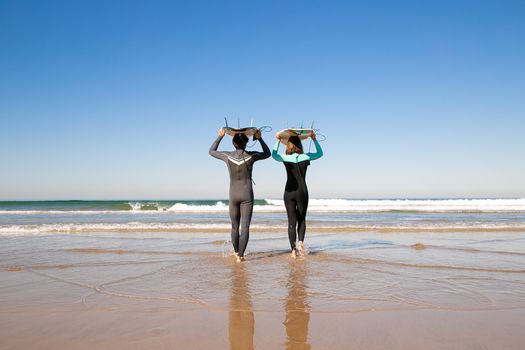
Best Wetsuits for Women (2026 Guide)
Women's-specific wetsuit picks across surfing, triathlon, and cold-water use. Why women's suits matter (not just smaller men's), fit guidance, and 7 reviewed options.
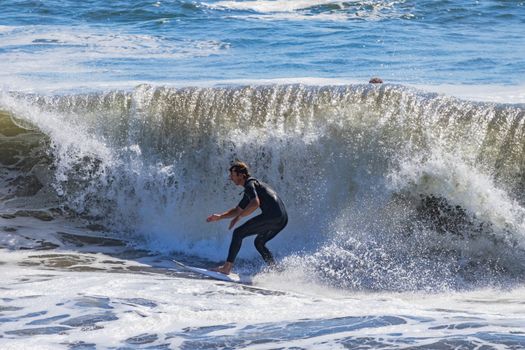
Best Wetsuits for Cold Water: 5/4mm and 6/5mm Reviewed
Independent picks for serious cold-water wetsuits - 5/4mm and 6/5mm hooded suits for winter surfing, PNW, New England, and sub-50°F water. Plus essential accessories.
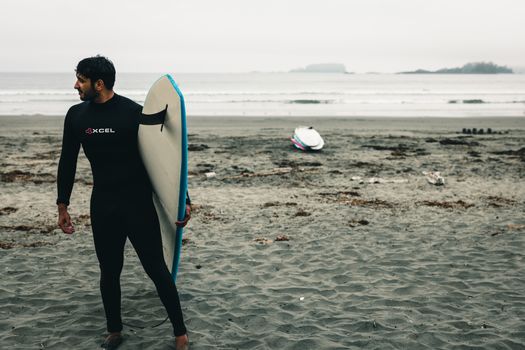
Best Wetsuits for British Columbia and Vancouver Island
BC wetsuit picks anchored to BC Shore Station Oceanographic Program data and firsthand sessions at Tofino and Long Beach in Pacific Rim National Park.