
On this page
- What cold water actually feels like in the Pacific Northwest
- The numbers: NDBC buoy climatology
- The PNW seasonal pattern (and why most generic guides get it wrong)
- What thickness for what month
- Why PNW suits differ from California suits
- Flush resistance, not flexibility
- Thermal lining quality
- Integrated hood vs separate hood
- Top picks for PNW cold water
- Accessories: the part nobody warns you about
- Real PNW spots and what we wear there
- Other cold-water regions
- The unpleasant parts no one warns you about
- Putting it together
- Sources cited
Cold water and the Pacific Northwest go together like wind chill and offshore mornings. Most generic wetsuit advice assumes you live somewhere warm enough that a 3/2 covers most of your year. If you surf Oregon, Washington, or northern California, a 3/2 is your summer suit at best, your shoulder-season suit if you run warm, and not the suit that defines your winter at all. This guide is for the readers actually shopping for a cold water wetsuit, with the kind of firsthand context the major publishers cannot replicate from their offices in Ventura or Vista.
We have logged sessions across the spots in this guide. The temperature numbers we cite are from real NOAA / NDBC climatic summaries with the period of record stated, not invented ranges. Where we have firsthand experience, we say what worked. Where we are working from research and reviewer consensus, we say that too.
Key Takeaways
- • PNW coastal water sits between roughly 47 and 57°F for most of the year. The numbers below come from real NDBC buoys, not estimates.
- • Coldest weeks land in February and March, not December. Warmest are September and October, not midsummer.
- • The right cold-water suit is hooded, taped, and chest-zip or zipperless. Everything else is incremental.
- • Below 50°F water, accessories are not optional. Hood, 5-7mm boots, 5mm gloves are part of the cost of admission.
If you want a tuned per-region recommendation, jump to the regional guides for Oregon, Washington, British Columbia, or Northern California. For a broader cold-water buyer’s guide that covers picks beyond the PNW, see best cold-water wetsuits.
What cold water actually feels like in the Pacific Northwest
Before we get to the gear, let us name the thing accurately. Cold water in the PNW is not a marketing word. It is the kind of cold where, in the first three minutes of the session, you get a brief ice cream headache as the water reaches your sinuses through the hood gap. It is the kind of cold where, twenty minutes in, the small muscles in your hands stop responding cleanly and your wax check goes from a smooth slide to a clumsy jab. It is the kind of cold where, when you walk back across the parking lot at Pacific City after a winter session, you have to brace your hands against the steering wheel for a couple of minutes because they will not yet uncurl enough to grip your keys.
We say this because most wetsuit content rounds the corners off cold-water surfing. We are not interested in romanticizing it. The point of a good cold-water wetsuit is to extend the window before that level of cold sets in, to make a 90-minute session possible at 47°F without sending you home shivering, and to let you rotate sessions through a season instead of writing off four months of the year. A great suit will not eliminate the cold. It will move the curve.
The numbers: NDBC buoy climatology
Anyone who tells you “PNW water sits in the 50s” is technically right and practically not very useful. Here are the actual NDBC monthly mean sea-surface temperatures from the climatic summaries published by the National Data Buoy Center. We have converted the °C values to °F for easy reading. Period of record is in parentheses; values are the published “MEAN” row of the SEA TEMPERATURE annual table for each station.
| Station | Location | Coldest month | Warmest month | Annual mean |
|---|---|---|---|---|
| NDBC 46050 | Stonewall Bank, 20 nm W of Newport, OR (1991–2008) | Feb / Mar: 50.2°F | Jun / Jul: 56.7°F | 53.6°F |
| NDBC 46089 | 85 nm W of Tillamook, OR (2004–2008) | Jan: 49.8°F | Aug / Sep: 62.8°F | 56.1°F |
| NDBC 46041 | Cape Elizabeth, off central WA (1987–2008) | Feb: 47.5°F | Aug: 57.2°F | 52.7°F |
| NDBC 46087 | Neah Bay, off NW WA (2004–2008) | Feb: 46.2°F | Jul: 53.4°F | 50.4°F |
| NDBC 46026 | San Francisco entrance approach (1982–2008) | Apr / May: 52.5°F | Sep: 57.9°F | 54.5°F |
| NDBC 46013 | Bodega Bay, NorCal (1981–2008) | Jun: 50.5°F | Sep / Oct: 55.2°F | 53.1°F |
A few things stand out the moment you sit with this table.
Spatial range matters. Neah Bay (46087) is consistently 4–6°F cooler than Stonewall Bank, which is itself often a degree or two cooler than the offshore Tillamook buoy. The colder you go up the Washington coast, the colder the water. Hobuck regulars know this in their bones; the Westport regulars know it less because Westport is meaningfully south.
The seasonal pattern is real. Both Oregon stations bottom out in February or March. The published February mean for Stonewall Bank in the 1991–2008 climatology is 10.1°C (50.2°F). The Cape Elizabeth February mean is 8.6°C (47.5°F). That is not a single bad week. That is the average across nearly two decades.
Northern California sits in the same band as the Oregon coast, which surprises new arrivals from southern California. Bodega Bay’s annual mean (53.1°F) is essentially identical to Stonewall Bank’s. The mechanism is upwelling, not latitude alone, and Ocean Beach SF feels colder than its latitude implies for that reason.
These are climatological monthly means. Daily readings can run 3–5°F either side of the mean depending on upwelling pulses, river outflow, and weather. We use the climatology because it is the right reference for picking a wetsuit, which you do not buy for a single day.
The PNW seasonal pattern (and why most generic guides get it wrong)
There is a piece of muscle memory many transplants take a year or two to update: in the Pacific Northwest, summer is not the warmest water of the year, and December is not the coldest.
The warmest coastal water lands in late August through early October. The Tillamook buoy (46089) hits 17.1°C (62.8°F) in both August and September in the 2004–2008 climatology and stays close through early October before dropping fast. By contrast, July at the same buoy is 16.1°C (61.0°F), which is warmer than May or June but not the year’s peak.
The coldest months are February and March. By that point in the year, the air has been cooling for months, runoff has been adding cold fresh water at the river mouths, and your own cold-tolerance has been eroding session by session. A February session at 50°F often feels colder than a December session at 51°F because of accumulated exposure.
Practically, this matters in two ways for choosing a wetsuit.
First, the suit you buy in November is not necessarily the suit you need in March. Many of us run a 4/3 hooded through December and January, then either step into a 5/4 or layer a thermal vest underneath the 4/3 once the deeper cold of late winter sets in.
Second, the suit you wear in October will feel warmer than the same suit in May, even when the published water temperature is similar. October you are coming off a summer of heat-soaked sessions and your cold tolerance is high. May you are coming off three months of true cold and your reserve is gone.
Our wetsuit temperature guide covers the general thickness-to-temperature math for any region. The PNW twist is that you should plan for the colder end of the climatology, not the average.
What thickness for what month
Mapping thickness to the data above, here is how we tend to rotate gear through a PNW year. This is the suit that lives at the front of the gear closet for each window, with the next-thicker option close behind.
| Window | Typical PNW water | Primary suit | Backup |
|---|---|---|---|
| Late August through October | 56–62°F (warmer) | 4/3 with separate hood available | 3/2 for very warm Indian-summer pulses |
| November through early December | 52–55°F | 4/3 hooded or 4/3 with attached/separate hood | 5/4 hooded for long sessions |
| Mid-December through mid-February | 49–52°F | 5/4 hooded | 6/5/4 hooded if you run cold |
| Mid-February through March | 47–50°F | 5/4 hooded with thermal vest layered | 6/5/4 hooded for sessions over 90 minutes |
| April through May | 49–53°F | 5/4 hooded early, 4/3 hooded by late May | 4/3 with separate hood once water clears 52°F |
| June through July | 53–58°F | 4/3 with separate hood, 4/3 hooded for windy days | 3/2 for warm-water exceptions |
The thickness guide covers the underlying physics of why the second number on a 4/3 (limb thickness) matters as much as the first. For a live recommendation that takes wind, session length, and personal cold tolerance into account, the interactive temperature chart is a faster path than reading another table.
Why PNW suits differ from California suits
You can buy the same nominal “4/3 chest-zip” from O’Neill or Rip Curl in San Diego or Newport. The suit you actually want for the PNW is a different specification of that nominal label. Three things matter more in cold water than in mild water.
Flush resistance, not flexibility
In Southern California, paddling flexibility is the dominant variable: water flushes, but the flush is 65°F, and you barely register it. In the PNW, every flush at 49°F is felt. We weight suits with fully taped seams (inside and outside), chest-zip or zipperless entry, and double-sealed neck collars much higher than we would for Huntington Beach. Brands like Xcel Drylock, O’Neill Psycho Tech, and Rip Curl Flashbomb Heatseeker built their reputations on flush resistance because they are tested in this water.
Thermal lining quality
A jersey-lined cold-water suit will keep you alive but feel lifeless and slow to recover from a flush. A premium thermal lining (Xcel’s DrylockCelliant, O’Neill’s Firewall Pro, Rip Curl’s Flash Lining) is the difference between getting cold once during a session and getting cold once and staying cold for the rest of it. In the PNW, this is not a luxury. We have written more on this in our wetsuit materials guide.
Integrated hood vs separate hood
Below about 52°F water, a hood is not optional. The question is whether to buy a suit with an attached, integrated hood or a non-hooded suit and a separate hood worn underneath. Integrated is warmer because the seal at the neck is part of the suit pattern rather than a layered overlap. Separate is more flexible because you can pull the hood down between sets. We surf hooded suits more often than not in the deep months, and separate hoods more often than not in the shoulder months.
Top picks for PNW cold water
The full Cold Water Wetsuits buying guide covers the broader 5/4mm and 6/5mm market in detail. For PNW-specific use, these four are the suits that come up most often when we talk to other regulars.
For the deep-winter end of the range, the Need Essentials 5/4 hooded earns a similar value-pick role. See the 5/4 hooded option
Accessories: the part nobody warns you about
Below 50°F, the suit alone is not enough. The water finds the gaps. Plan to spend another $150–$250 on accessories on top of the suit, or accept that you will lose 30 minutes of every session to discomfort.
Hood. If your suit is not hooded, a 3mm hood is the single highest-leverage accessory in the cold-water kit. Heat loss from the head is real. We use the Xcel Drylock 3mm hood when our suit’s collar plays well with it, and the Patagonia R3 Yulex hood when we want a slightly thicker option in plant-based natural rubber.
Boots. Below 55°F, your feet will tell you. Below 50°F, they will demand. We rotate between 5mm round-toe boots in the shoulder months and 7mm in February and March. The O'Neill Heat 5mm is our most-used midweight option; the Xcel Drylock 7mm is the deep-cold pick.
Gloves. This is where we admit defeat for most of the year. Below 52°F we glove up, and below 48°F we go to mittens for sessions over an hour. The Rip Curl Flashbomb 5mm glove is the right balance for most days; the O'Neill Psycho Tech 7mm mitten is what we reach for when we know we will be in the water for a long time.
For the broader buying picture, the accessories tier in the cold-water wetsuit guide covers what we look for in each piece.
Real PNW spots and what we wear there
We have surfed each of the spots below, and the suit notes are based on what we have actually worn there, not on what generic ranking guides suggest.
Pacific City, OR. Beach break south of the Cape, exposed to swell and wind. November through April we are in a 5/4 hooded most days. Summer mornings can be 4/3 weather if you catch the warm pulse, but the wind picks up by 11 AM and you regret being underdressed.
Short Sands (Oswald West), OR. Cove break, sheltered, the friendliest cold-water spot on the central Oregon coast in our experience. The cove keeps the wind off you on the paddle out, but the water itself is the same upwelling-cold North Pacific the rest of the coast deals with. We default to a 4/3 hooded here from October through May.
Indian Beach (Ecola State Park), OR. Same band as Short Sands, slightly more exposed. We wear what we wear at Short Sands. Bring extra layers for the hike out.
Cannon Beach and Seaside, OR. Beach breaks. Cannon is more accessible than Short Sands and gets crowded on weekends. Seaside has a more developed local crew. Both are firmly 4/3 hooded territory in winter.
Westport, WA. The single most consistent year-round break in Washington. South-facing exposure picks up south swell when the rest of the coast is flat. Water at Westport runs a degree or two warmer than further north because of the sheltering of Grays Harbor. We have surfed Westport in a 4/3 hooded from October to April; only the deepest weeks of February pushed us to a 5/4.
La Push and Hobuck, WA. This is the cold end. Hobuck regulars surf in 5/4 hooded much of the year. The Neah Bay buoy (46087) shows why: 46.2°F February mean, only 53.4°F at peak summer. If you are headed to Hobuck in the off-season, plan for a 6/5/4 hooded with 7mm boots and 5mm or 7mm mittens.
For the regional deep dives with full picks per spot, see our Oregon coast guide, Washington coast guide, Northern California guide, and British Columbia guide.
Other cold-water regions
The PNW is our home base, but cold-water surfing happens across North America. Two other regions warrant their own guides:
- Best wetsuits for Maine and New England covers the Northeast US, where winter water drops to 37°F (the coldest mainland US surf water) but summer warms to a real 65°F. The seasonal range is the widest of any major US surf zone.
- Best wetsuits for Great Lakes surfing and swimming covers freshwater surfing on Lakes Michigan, Superior, Erie, and Ontario. The range is even wider than the East Coast (genuine ice in winter, 70°F+ in summer), and the drysuit-versus-wetsuit decision matters more than anywhere else.
We have less firsthand experience with those two regions than with the PNW or NorCal, and we say so explicitly in those guides. The cold-water gear principles still transfer cleanly.
The unpleasant parts no one warns you about
We promised at the top to not romanticize cold water. A few honest items.
The first 60 seconds. Even with a perfect 5/4 hooded suit, the first minute after you submerge is uncomfortable. Cold water bleeds into the suit through the wrists, ankles, and neck, and your body is heating it from scratch. Push through. The discomfort fades, and the suit becomes the suit it was designed to be.
Brain freeze through the hood. You will get an ice cream headache the first few duck-dives in February, even with a hood. There is a small gap at the top of the hood where the water finds your forehead and sinuses. The headache resolves in two or three minutes. It will happen again next session.
Post-session shakes. This is the part that surprises new cold-water surfers. You feel fine in the water, you feel fine walking out, and then ten minutes later in the parking lot you start shivering uncontrollably. This is your body finally allowed to register the heat debt. It is normal and expected. A car with hot air on full and a thermos of warm water (poured over your head and down your wetsuit before you change) shortens it dramatically.
Numb hands when you try to take the suit off. Your fingers will not respond cleanly when you reach the parking lot. Plan for this. A change towel or a proper change robe helps. So does keeping your boots on while you peel off the suit; the cold from the asphalt through bare feet will undo what little warmth your core has held.
Wetsuit nightmares (literally). Some of us have, on more than one occasion, dreamed about being unable to get out of a tight cold-water suit. This is universal. Mention it to any regular and they will laugh.
Putting it together
If you take one thing from this guide: the PNW cold-water wetsuit is a system, not a single suit. A premium 5/4 hooded covers the deep months. A 4/3 hooded or 4/3 with separate hood covers the shoulder months. Boots, gloves, and a hood are part of the kit, not optional. The water is what it is, and the gear is what makes the water tolerable.
For specific picks tuned to a region, the Pacific Northwest surfing guide and the regional articles linked above are the right next stops. For a tuned recommendation across activity, water temperature, budget, and personal tolerance, the Wetsuit Finder tool takes about 60 seconds. For year-round PNW surfers planning multiple suits, the Quiver Builder tool lays out the matched 5/4 hooded plus 4/3 plus accessories quiver in one pass. For the broader cold-water market, the best cold-water wetsuits guide covers the 5/4 and 6/5 segment in detail. And for the mindset side of cold-water surfing, our complete guide to cold-water surfing covers training, recovery, and session planning.
The PNW is one of the few places in the surfing world where the gear genuinely matters. Treated right, it is also one of the few places where you can get the entire coast to yourself in February.
Sources cited
- NDBC Station 46050 (Stonewall Bank, OR) climatic summary, period of record 11/1991–12/2008. ndbc.noaa.gov/data/climatic/46050.txt
- NDBC Station 46089 (Tillamook offshore, OR) climatic summary, period of record 11/2004–12/2008. ndbc.noaa.gov/data/climatic/46089.txt
- NDBC Station 46041 (Cape Elizabeth, WA) climatic summary, period of record 06/1987–12/2008. ndbc.noaa.gov/data/climatic/46041.txt
- NDBC Station 46087 (Neah Bay, WA) climatic summary, period of record 07/2004–12/2008. ndbc.noaa.gov/data/climatic/46087.txt
- NDBC Station 46026 (San Francisco approach) climatic summary, period of record 07/1982–12/2008. ndbc.noaa.gov/data/climatic/46026.txt
- NDBC Station 46013 (Bodega Bay, CA) climatic summary, period of record 04/1981–12/2008. ndbc.noaa.gov/data/climatic/46013.txt
Frequently asked
What's the warmest the Pacific Northwest gets?
Coastal water gets warmest in late summer and early fall, not midsummer. NDBC buoy 46089 off Tillamook averages 17°C (63°F) in July and August in the published 2004-2008 climatology. Inshore at protected spots, you can see a degree or two warmer. Genuinely warm by PNW standards. Still firmly 4/3 territory for most people.
When is PNW water actually coldest?
February and March, by a few weeks. Stonewall Bank (NDBC 46050, off Newport) averages 10.1°C (50.2°F) in both months in the 1991-2008 climatology. Cape Elizabeth (46041, off the Washington coast) drops to 8.6°C (47.5°F) in February. By those weeks, you have been in the cold long enough that your tolerance has dropped. The first weeks of true winter often feel colder than the actual coldest week.
Is a 4/3 enough for the Oregon coast?
For most of the year, with hood and boots, yes. December through March, most of us reach for a 5/4 or step up to a hooded 4/3 with a separate hood underneath. The decision is less about the calendar than about how long you intend to be in the water. A 4/3 is fine for an hour at 49°F. It is miserable at three hours.
Do I really need a hooded suit, or just a hood?
An attached-hood (integrated) suit seals better at the neck than a separate hood plus a non-hooded suit. The flush at the neck where a separate hood meets the suit collar is one of the most consistent cold-water pain points. If you surf Oregon or Washington in winter regularly, integrated is worth the extra cost. If you mostly surf the warmer half of the year and occasionally extend, a separate hood is a fine compromise.
About The WetsuitCenter Team
Our buying guides are written and maintained by staff who actually get cold and wet testing this gear: surfers, divers, and open-water swimmers logging real hours across seasons and water temps.
You might also like
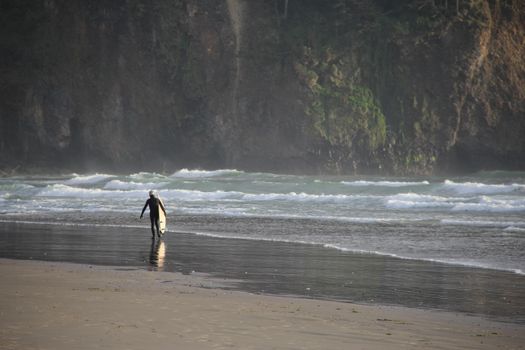
Best Wetsuits for Pacific Northwest Surfing
PNW-specific wetsuit picks for surfers in Oregon, Washington, and the Salish Sea, anchored to NOAA buoy data and tested in actual cold water.
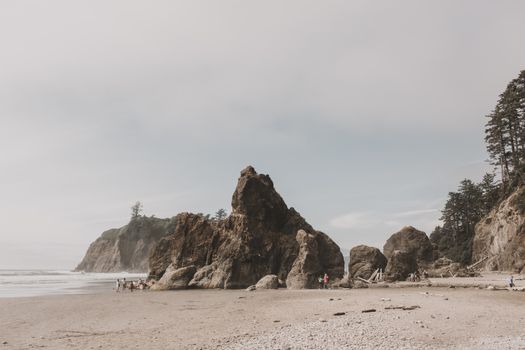
Best Wetsuits for the Washington Coast
Washington wetsuit picks tuned to the cold North Pacific, anchored to NDBC buoy data and firsthand sessions at Westport, La Push, and Hobuck.
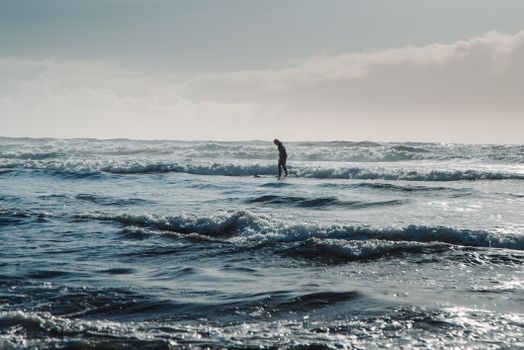
Best Wetsuits for the Oregon Coast
Oregon-specific wetsuit picks anchored to NDBC buoy data and firsthand sessions at Pacific City, Short Sands, Indian Beach, Cannon Beach, and Seaside.