
On this page
- Oregon water temperature reality
- Oregon’s seasonal pattern
- Quick picks
- Best overall Oregon winter: Xcel Drylock 5/4 Hooded
- Best for shoulder months: O’Neill Mutant 4/3
- Best for back-to-back trips: Rip Curl Flashbomb Heatseeker 5/3 Hooded
- Best 4/3 hooded value: Vissla 7 Seas Raditude
- Best budget cold-water: Need Essentials 5/4 Hooded
- Spot-specific notes
- Accessories
- How we tested
- Putting it together
- Sources cited
The Oregon coast runs cold, windy, and consistent. We surf it year-round, and we have learned that the right Oregon wetsuit is the one that handles wind chill on the paddle out, flush at duck-dive, and the post-session shakes when you reach the parking lot. Generic wetsuit lists do not capture what makes a suit work here. This guide covers the specific picks that earn their place in our Oregon rotation, the spot-by-spot context behind those picks, and the seasonal pattern most national reviewers miss.
For the broader cold-water context across the entire Pacific Northwest, our cold-water and Pacific Northwest pillar is the place to start. This article narrows to Oregon specifically.
Key Takeaways
- • Oregon coastal water sits between roughly 50 and 57°F for most of the year, with February and March the coldest weeks.
- • A 5/4 hooded for winter and a 4/3 hooded for shoulder months is the standard two-suit Oregon setup.
- • Wind exposure is the variable that pushes Oregon surfers thicker than the water alone would suggest.
- • Hooded integrated construction matters more on the central Oregon coast than it does most places. Plan for it from the start.
Oregon water temperature reality
Two NDBC buoys cover the Oregon coast cleanly, and the published climatic summaries give us reliable monthly mean sea-surface temperatures.
| Station | Location | Coldest month | Warmest month | Annual mean |
|---|---|---|---|---|
| NDBC 46050 | Stonewall Bank, 20 nm W of Newport (1991–2008) | Feb / Mar: 50.2°F | Jun / Jul: 56.7°F | 53.6°F |
| NDBC 46089 | 85 nm W of Tillamook (2004–2008) | Jan: 49.8°F | Aug / Sep: 62.8°F | 56.1°F |
These are climatological monthly means, not single-day readings. Daily values can run 3 to 5°F either side of the mean depending on upwelling pulses, river outflow, and weather. We use the climatology for picking suits because you do not buy a suit for a single day.
Two things stand out in the table. First, the offshore Tillamook buoy runs warmer in late summer than the inshore Stonewall Bank buoy. That is upwelling: cold deep water surfaces near the coast through summer, holding nearshore Newport in the upper 50s°F while the offshore band warms into the low 60s°F. Second, the seasonal pattern is real and consistent. Stonewall Bank’s mean SST is identical (50.2°F) in February and March. The cold doesn’t ease in March; it just stops getting worse.
For more on how wetsuit thickness maps to water temperature, see our thickness guide and the interactive temperature chart.
Oregon’s seasonal pattern
The Oregon year, in wetsuit terms:
- September and October are typically the warmest weeks. Tillamook offshore averages 17.1°C (62.8°F) in both months. Inshore at Pacific City you may see warm pulses in the 56 to 58°F range on calm days. We surf 4/3 hooded by default with a 3/2 backup for warm-water exceptions.
- November and early December sit around 53 to 55°F. Stonewall Bank averages 11.6°C (52.9°F) in November. We wear 4/3 hooded primary with the 5/4 in the truck for unexpected cold pulses.
- Mid-December through mid-February is the hardest stretch. Water in the 49 to 51°F range, air often colder, wind on top of all of it. 5/4 hooded as primary; some surfers carry a 6/5/4 hooded as a backup for genuinely brutal days.
- Mid-February through March is the actual coldest stretch. Stonewall Bank averages 50.2°F in February and March. Wear what you wore in January, plus a thermal vest underneath if you are doing long sessions.
- April through May ranges 50 to 53°F. We start in 5/4 hooded and gradually move back to 4/3 hooded as May progresses.
- June through August is shoulder-warm. Stonewall Bank averages 56.7°F in June and July; Tillamook offshore is warmer. 4/3 hooded for windy days, 4/3 with separate hood for calm days, occasional 3/2 for the rare warm pulse.
For a tuned recommendation that accounts for personal cold tolerance and session length, the Wetsuit Finder takes 60 seconds. Planning a multi-suit Oregon-coast quiver? The Quiver Builder lays out the matched 5/4 hooded plus 4/3 plus accessories.
Quick picks
| Category | Pick | Price |
|---|---|---|
| Best overall Oregon winter | Xcel Drylock 5/4 Hooded | $500–$600 |
| Best for shoulder months | O’Neill Mutant 4/3 (detachable hood) | $300–$400 |
| Best for back-to-back trips | Rip Curl Flashbomb Heatseeker 5/3 | $500–$600 |
| Best 4/3 hooded value | Vissla 7 Seas Raditude 4/3 Hooded | $280–$360 |
| Best budget cold-water | Need Essentials 5/4 Hooded | $230–$280 |
Best overall Oregon winter: Xcel Drylock 5/4 Hooded
This is the suit we reach for most often through Oregon’s deep months. Fully taped seams inside and out hold up against repeated duck-dives. The DrylockCelliant lining recovers warmth fast, which matters when you are paddling back out into a cold-water flush every minute. The hood pattern is generous enough to work for most head shapes.
Sized correctly, it is also the most flush-resistant 5/4 hooded suit in this price tier. The trade-offs are weight, athletic fit, and slow overnight dry-out.
Best for shoulder months: O’Neill Mutant 4/3
If you only own one wetsuit and need it to cover Oregon’s full year, the Mutant is the most flexible answer in our experience. Snap the hood on for November paddles at Cannon Beach, snap it off for warm September sessions at Pacific City, and you have a suit that handles roughly nine months of the year well.
The seal at the hood-to-collar junction is not as tight as a fully integrated hooded suit. In deep January cold, a dedicated 5/4 hooded beats a Mutant with hood attached. For shoulder months, the difference is small.
Best for back-to-back trips: Rip Curl Flashbomb Heatseeker 5/3 Hooded
If you regularly drive the coast and surf two days in a row at different spots, the Flashbomb Heatseeker’s Flash Lining is the feature that pays for itself. We have done dawn patrol Saturday at Pacific City, evening session Sunday at Indian Beach, and not had to wear a wet suit for the second session.
It runs slightly cooler per single session than the Drylock, but the difference shows up in the last 20 minutes of a 90-minute session, not in the first hour.
Best 4/3 hooded value: Vissla 7 Seas Raditude
For Oregon shoulder months, a hooded 4/3 at the value tier is often the right call. The 7 Seas Raditude uses limestone-based neoprene, integrated hood, and GBS-with-tape construction. Less warmth retention than a flagship 4/3, but more honest pricing and a real eco-leaning materials story.
Best budget cold-water: Need Essentials 5/4 Hooded
The only sub-$300 5/4 hooded we recommend for Oregon. Direct-to-consumer pricing from Australia, GBS with inside taping, integrated hood, basic thermal lining. Not on the level of a Drylock, but a real 5/4 hooded with construction that holds up in actual cold water.
Spot-specific notes
We have surfed all of these spots, and the suit notes are based on what we have actually worn there.
Pacific City. South-facing beach break in the lee of Cape Kiwanda. The Cape blocks some of the prevailing northwest wind, which makes Pacific City marginally more comfortable than fully exposed beaches further north. Through winter, we are in a 5/4 hooded as default. Late summer can be 4/3 weather if you catch the warm pulse and avoid the afternoon onshore.
Short Sands (Oswald West State Park). Cove break, sheltered from most wind directions on the paddle out. Hike-in access keeps the crowd thinner than other Oregon spots. The cove keeps wind chill off you, but the water is the same upwelling-cold North Pacific. We default to a 4/3 hooded here from October through May, switching to a 5/4 hooded only for the deepest weeks.
Indian Beach (Ecola State Park). Same temperature band as Short Sands but slightly more exposed to wind. Bring extra layers for the hike out; you will be cold in the parking lot before you are dry.
Cannon Beach. Sandy beach break, easy access, popular with weekend visitors. The beach orientation catches more wind than the cove spots. Solidly 5/4 hooded territory in winter, with no question about it.
Seaside. A more developed local crew, beach-break peaks scattered along the long sand. The proximity to Tillamook Head can shelter the south end on certain wind directions but not on most. Same 5/4-hooded-in-winter default applies.
Newport area (Otter Rock, Agate Beach). Closer to the offshore Stonewall Bank buoy data, which sits around 50.2°F in February and March. We surf this stretch less often than the Cannon Beach to Pacific City corridor, but the gear answer is the same.
Lincoln City and the central beaches. Beach breaks scattered across long sandy stretches. Wind exposure is heavier than at the cove spots. We have not surfed Lincoln City often enough to recommend a specific spot, but the gear answer scales identically to the rest of the coast.
For a fuller view of what each spot is like across the broader region, the PNW surfing buying guide has the full-region picks. For neighboring waters, see our Washington coast guide and Northern California guide.
Accessories
For Oregon winter, accessories are not optional.
Boots. 5mm in shoulder months, 7mm for winter. O'Neill Heat 5mm for shoulder months; Xcel Drylock 7mm for January and February.
Gloves. 5mm five-finger handles most of winter for most surfers. Rip Curl Flashbomb 5mm glove is the right balance. For long sessions or genuinely cold weeks, mittens beat fingered gloves.
Hood. If your primary suit is non-hooded, a 3mm hood is the highest-leverage accessory in the Oregon kit. Xcel Drylock 3mm hood seals well under most surf-suit collars.
For the broader accessory market, the cold-water wetsuits guide covers our picks across the category.
How we tested
These suits have been worn by team members across Oregon spots through multiple winters and shoulder seasons. We log session length, water temperature (verified against NDBC buoys when available), air temperature, wind, and subjective comfort at 30, 60, and 90 minutes. Several of these suits have been on rotation for two or more years, and the durability notes reflect actual long-term use.
We bought most of these suits ourselves at retail. None were provided by brands. Our methodology page covers the testing process in detail.
Putting it together
The cleanest Oregon two-suit setup is a hooded 4/3 (Mutant or Vissla 7 Seas Raditude) for October through November and April through June, plus a hooded 5/4 (Drylock, Psycho Tech, or Flashbomb Heatseeker) for December through March. Add 5mm and 7mm boots, 5mm gloves, and a separate hood if your 4/3 is non-hooded.
For the broader regional context, see our PNW pillar guide. For the deeper “how do I survive cold-water surfing” angle, our complete guide to cold-water surfing covers training, recovery, and the unpleasant parts no one warns you about.
Sources cited
- NDBC Station 46050 (Stonewall Bank, OR) climatic summary, 11/1991–12/2008. ndbc.noaa.gov/data/climatic/46050.txt
- NDBC Station 46089 (Tillamook offshore, OR) climatic summary, 11/2004–12/2008. ndbc.noaa.gov/data/climatic/46089.txt
Frequently asked
What thickness do most Oregon surfers wear?
Through winter (December to March), most Oregon regulars are in a 5/4 hooded suit. From October to early December and again in May to June, a 4/3 hooded or 4/3 with separate hood is the right choice. July through September the central coast warms enough that some sessions go in a 3/2 plus hood, but most of us still default to 4/3 because the wind makes the difference.
Is Pacific City warmer than Cannon Beach?
Marginally, but not in a way that changes the suit you wear. Both spots draw water from the same offshore band visible in the NDBC buoys (46050 Stonewall Bank and 46089 Tillamook). Pacific City's south-facing exposure picks up a little more direct sun on the inshore band on calm days, but you are still surfing in 47 to 56°F water depending on the month.
Why does October feel warmer than May at the same temperature?
Coastal water temperatures in early fall and late spring are similar (low to mid 50s°F), but your cold tolerance is not. October you are coming off a summer of warm sessions and your body still has reserves. May you are coming off four months of true cold and your tolerance is depleted. The same suit at 51°F in October feels more comfortable than 51°F in May.
Are there warmer spots on the Oregon coast?
The river-mouth spots and protected coves run a degree or two warmer at the surface on still summer days, especially on outgoing tides where warmer freshwater mixes in. Cape Kiwanda's lee at Pacific City and the Oswald West cove at Short Sands both sit a bit warmer than fully exposed beach breaks. The difference is real but not enough to change your wetsuit choice.
About The WetsuitCenter Team
Our buying guides are written and maintained by staff who actually get cold and wet testing this gear: surfers, divers, and open-water swimmers logging real hours across seasons and water temps.
You might also like
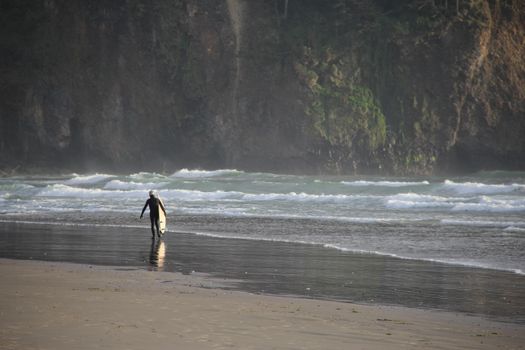
Best Wetsuits for Pacific Northwest Surfing
PNW-specific wetsuit picks for surfers in Oregon, Washington, and the Salish Sea, anchored to NOAA buoy data and tested in actual cold water.
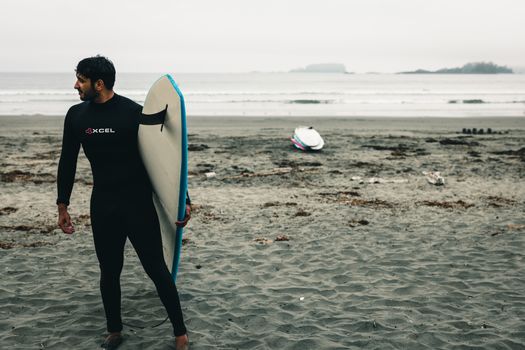
Best Wetsuits for British Columbia and Vancouver Island
BC wetsuit picks anchored to BC Shore Station Oceanographic Program data and firsthand sessions at Tofino and Long Beach in Pacific Rim National Park.
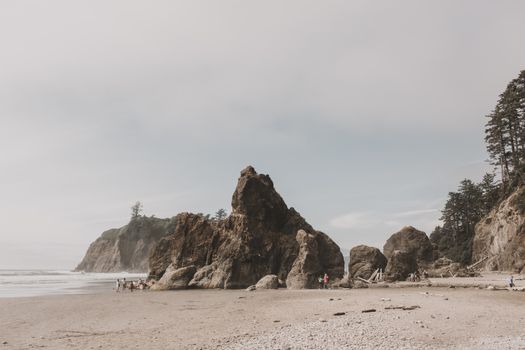
Best Wetsuits for the Washington Coast
Washington wetsuit picks tuned to the cold North Pacific, anchored to NDBC buoy data and firsthand sessions at Westport, La Push, and Hobuck.