
On this page
- Northern California water temperature reality
- NorCal’s seasonal pattern
- Quick picks
- Best overall NorCal: O’Neill Hyperfreak 4/3 with separate hood
- Best for Ocean Beach SF: Xcel Comp X 4/3
- Best year-round value: Vissla 7 Seas Raditude 4/3 Hooded
- Best winter / cold-tolerant: Xcel Drylock 5/4 Hooded
- Best Santa Cruz mid-tier: O’Neill Mutant 4/3
- Best regional: Buell RB2 5/4 Hooded
- Spot-specific notes
- Cold-water accessories for NorCal
- How we tested
- Putting it together
- Sources cited
Northern California sits in a strange spot in the wetsuit world. The water is colder than its latitude suggests because of relentless coastal upwelling, the air is windier than the southern part of the state, and the surf is bigger and more demanding on average. A Northern California wetsuit has to balance year-round 50s°F water with the flexibility to handle long, demanding paddles. We have surfed every spot in this guide, and the picks reflect that experience.
For broader cold-water context, our cold-water and Pacific Northwest pillar covers the seasonal pattern and gear philosophy that applies across the whole West Coast. This article narrows to NorCal specifically.
Key Takeaways
- • NorCal water averages 50 to 58°F year-round, with the warmest weeks in September and October, not summer.
- • A 4/3 hooded or 4/3 with separate hood handles most of the year for most surfers.
- • Upwelling makes summer surprisingly cold; June is the actual coldest month at Bodega Bay.
- • Santa Cruz runs slightly warmer than SF due to Monterey Bay shelter; the gear answer is similar but the deep cold is shorter.
Northern California water temperature reality
Two NDBC buoys cover the region cleanly.
| Station | Location | Coldest month | Warmest month | Annual mean |
|---|---|---|---|---|
| NDBC 46026 | San Francisco entrance approach (1982–2008) | Apr / May: 52.5°F | Sep: 57.9°F | 54.5°F |
| NDBC 46013 | Bodega Bay (1981–2008) | Jun: 50.5°F | Sep / Oct: 55.2°F | 53.1°F |
These are climatological monthly means.
Three things stand out.
The seasonal inversion is real. Bodega Bay’s coldest month in the published 1981–2008 climatology is June, at 50.5°F. The warmest months are September and October, both at 55.2°F. This is upwelling-driven and surprises new arrivals from anywhere else.
The annual range is narrow. Bodega Bay sees only about 5°F of variation across the year. SF’s range is slightly wider but still narrow compared to the East Coast or Great Lakes. NorCal water is stable cold, not cold-then-warm. You wear similar gear most of the year.
The latitude lies. A surfer landing in San Francisco from Southern California is often surprised that water in San Francisco summer is similar to water in Santa Barbara winter. The SF buoy’s July mean is 55.6°F, lower than Santa Barbara’s water in any winter month.
For more on how thickness maps to water temperature, see our thickness guide and the interactive temperature chart.
NorCal’s seasonal pattern
The NorCal year, in wetsuit terms:
- September and October are the warmest weeks. Bodega Bay averages 55.2°F. SF approach averages 56.8 to 57.9°F. We surf 4/3 with separate hood by default, occasional 3/2 plus hood for warm pulses.
- November and December sit around 53 to 55°F. We default to 4/3 hooded.
- January and February are mild by PNW standards. SF approach averages 52.7°F in January, 53.2°F in February. The cold is real but stable. 4/3 hooded is the default for most surfers; cold-sensitive surfers step up to a 5/4 hooded.
- March through May is the cooler stretch. Bodega Bay drops from 51.5°F in March to 50.7°F in May, and June bottoms out at 50.5°F. We stay in a 4/3 hooded.
- June through August is the cold-water summer. 4/3 hooded continues to be the right answer. Newcomers from southern California learn this the hard way.
For a tuned recommendation, the Wetsuit Finder takes 60 seconds.
Quick picks
| Category | Pick | Price |
|---|---|---|
| Best overall NorCal | O’Neill Hyperfreak 4/3 (with separate hood) | $260–$320 |
| Best for Ocean Beach SF | Xcel Comp X 4/3 | $380–$450 |
| Best year-round value | Vissla 7 Seas Raditude 4/3 Hooded | $280–$360 |
| Best winter / cold-tolerant | Xcel Drylock 5/4 Hooded | $500–$600 |
| Best Santa Cruz mid-tier | O’Neill Mutant 4/3 (detachable hood) | $300–$400 |
| Best regional | Buell RB2 5/4 Hooded | $400–$500 |
Best overall NorCal: O’Neill Hyperfreak 4/3 with separate hood
The Hyperfreak is the suit that most NorCal surfers we know default to year-round, paired with a separate 3mm hood used as needed. TechnoButter 3 shoulder panels keep the suit paddling well at Ocean Beach (where you will paddle a lot). Fluid-taped seams hold against duck-dives in 52°F water.
The play is to buy the Hyperfreak as your primary suit and add a separate hood. You wear hood for SF in winter and most of Bodega Bay year-round. You skip the hood for warm pulses at Santa Cruz in September. For the cold-tolerant surfer, this single setup covers nine to ten months of the NorCal year.
(A 4/3 version of the Hyperfreak follows the same pattern at slightly higher cost; we have included the 3/2 here as the more common choice for NorCal where a hooded 4/3 is overkill for nine months and a 3/2 with hood is plenty.)
Best for Ocean Beach SF: Xcel Comp X 4/3
Ocean Beach is the part of NorCal where the cold stays cold and the paddles stay long. The Comp X is Xcel’s competition-grade 4/3, built for surfers who need flush resistance plus shoulder mobility. Premium Japanese neoprene, Radiant Rebound thermal lining, fully taped seams. We have worn it through SF winters and gotten 90-minute sessions out of it without losing core warmth.
Pair it with a separate 3mm hood and it becomes the gear answer for SF year-round.
Best year-round value: Vissla 7 Seas Raditude 4/3 Hooded
For NorCal surfers who do not want to manage a separate hood and prefer integrated construction at a value price, the Vissla 7 Seas Raditude works. Limestone neoprene, recycled-content lining, integrated hood, GBS-with-tape seams. Less flex than a Hyperfreak, less warmth than a Comp X, but legitimately PNW-capable at a mid-range price.
Best winter / cold-tolerant: Xcel Drylock 5/4 Hooded
Most NorCal surfers do not need a 5/4. The cold-tolerant ones who surf through January and February without fail will appreciate one. The Drylock is the right pick for the SF approach in deep winter or for any NorCal surfer who runs cold or surfs long sessions.
Best Santa Cruz mid-tier: O’Neill Mutant 4/3
Santa Cruz benefits from Monterey Bay’s east-facing shelter and runs warmer than SF or Bodega Bay. The Mutant’s detachable hood handles the year cleanly: hood off for September warmth at Pleasure Point, hood on for January at Steamer Lane. It is the most flexible single-suit answer for Santa Cruz regulars.
Best regional: Buell RB2 5/4 Hooded
Buell is Santa Cruz-based, which makes them the most logical regional pick for NorCal. The RB2 5/4 Hooded uses mid-tier premium neoprene and taped seams at a price below the major-brand premium tier. Distribution is heaviest at independent surf shops along the West Coast.
Spot-specific notes
We have surfed each of these spots, and the suit notes reflect what we have actually worn there.
Ocean Beach, San Francisco. Long beach break with multiple peaks, north of the SF entrance. Year-round upwelling-cold water (52 to 58°F per NDBC 46026), heavy paddles, frequent wind. We default to a 4/3 hooded most of the year and step up to a 5/4 hooded only in deep January for long sessions. The Hyperfreak with separate hood or Comp X with hooded variant is the most-worn setup in our SF rotation.
Mavericks (Half Moon Bay). Big-wave spot in deep water about 25 miles south of SF. We have surfed Mavericks once or twice in the smaller years; if you are paddle-surfing the Bowl, you are doing it on big-wave days when conditions are heavier than anywhere else in NorCal. Gear answer is the same as Ocean Beach: 4/3 hooded floor, 5/4 hooded for serious days. The water itself sits in the 52 to 58°F band like the rest of the SF region.
Pleasure Point (Santa Cruz). East-facing, sheltered by the rest of the bay. The water runs marginally warmer than SF or Bodega and the wind is less consistent. Mutant 4/3 with hood is our most-worn setup here. Year-round 4/3 territory; 3/2 plus hood for warm pulses in September.
Steamer Lane (Santa Cruz). The Lane sits more exposed than Pleasure Point but still benefits from Monterey Bay’s general warmth advantage over SF. Same gear as Pleasure Point. Crowds are heavier at the Lane on most weekends.
For the broader regional picture, see our PNW pillar and adjacent Oregon coast and Washington coast guides.
Cold-water accessories for NorCal
Below 55°F, accessories matter even when the water seems warm enough by SoCal standards.
Boots. 5mm round-toe handles most of the NorCal year. O'Neill Heat 5mm is the right balance. For SF in February if the water dips toward 50°F, switching to Xcel Drylock 7mm is reasonable for long sessions.
Hood. A 3mm hood is the most-used accessory in our NorCal kit. Xcel Drylock 3mm hood seals well under most surf-suit collars.
Gloves. Optional for most NorCal surfers most of the year. We pull out the 5mm gloves for SF January when sessions go long: Rip Curl Flashbomb 5mm glove . Most NorCal surfers we know consider gloves a personal preference rather than a year-round requirement.
For broader accessory picks, see best cold-water wetsuits.
How we tested
These suits have been worn by team members across NorCal spots through multiple winters and shoulder seasons. We log session length, water temperature (verified at NDBC 46026 and 46013 when possible), wind, and subjective comfort at 30, 60, and 90 minutes. Several of these suits have been on rotation for two-plus years.
We bought most of these suits at retail. None were provided by brands. Our methodology page covers the testing process.
Putting it together
The cleanest NorCal setup is a 4/3 with hood (separate or integrated) as the year-round primary, with an optional 5/4 hooded backup for cold-tolerant SF regulars who go long in winter. Add 5mm boots, a 3mm hood if your suit is non-hooded, and 5mm gloves only if you regularly surf 90-minute sessions in January.
For broader regional context, see the PNW pillar. For a tuned recommendation, the Wetsuit Finder takes 60 seconds. NorCal-specific multi-suit setup: the Quiver Builder maps the 4/3 plus 4/3 hooded combination NorCal surfers use year-round.
Sources cited
- NDBC Station 46026 (San Francisco approach) climatic summary, 07/1982–12/2008. ndbc.noaa.gov/data/climatic/46026.txt
- NDBC Station 46013 (Bodega Bay, CA) climatic summary, 04/1981–12/2008. ndbc.noaa.gov/data/climatic/46013.txt
Frequently asked
Why is Northern California water so cold in summer?
Upwelling. From late spring through summer, prevailing northwesterly winds drive warm surface water offshore, and cold deep water rises to replace it along the coast. The result is the counterintuitive pattern visible in NDBC 46013 (Bodega Bay): June averages 50.5°F, the coldest month of the year, while September averages 55.2°F. Most generic surf guides assume summer means warmer water. NorCal is one of the places where that assumption fails.
What thickness do most NorCal surfers wear?
Year-round, most NorCal regulars are in a 4/3 with a hood (separate or integrated). The water rarely warms enough to justify a 3/2, and rarely cools enough to require a 5/4 for most surfers. The exceptions are December through February for cold-sensitive surfers, who step up to a 5/4, and short summer pulses for warm-water transplants, who occasionally wear 3/2 in mid-September.
Is San Francisco colder than Santa Cruz for surfing?
Yes, by a few degrees on the average. NDBC 46026 (San Francisco approach) and 46013 (Bodega Bay) both show year-round upwelling-cold water, while Pleasure Point and Steamer Lane in Santa Cruz benefit from the Monterey Bay's eastward orientation, which traps slightly warmer surface water. The practical effect is that Santa Cruz tolerates a 4/3 non-hooded for shoulder months, while Ocean Beach is hooded territory most of the year.
Do I need a hood for Northern California?
From October through May, yes, for most surfers most of the time. Even in September when the water peaks at 57 to 58°F, wind on the SF approach makes a hood worth carrying. Santa Cruz surfers can sometimes get away without one in shoulder months. SF surfers basically cannot.
About The WetsuitCenter Team
Our buying guides are written and maintained by staff who actually get cold and wet testing this gear: surfers, divers, and open-water swimmers logging real hours across seasons and water temps.
You might also like
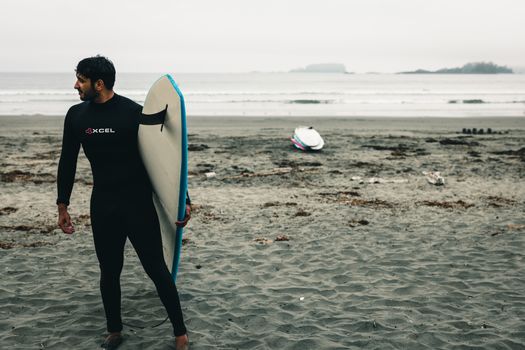
Best Wetsuits for British Columbia and Vancouver Island
BC wetsuit picks anchored to BC Shore Station Oceanographic Program data and firsthand sessions at Tofino and Long Beach in Pacific Rim National Park.
Best Wetsuits for the Oregon Coast
Oregon-specific wetsuit picks anchored to NDBC buoy data and firsthand sessions at Pacific City, Short Sands, Indian Beach, Cannon Beach, and Seaside.
Best Wetsuits for Pacific Northwest Surfing
PNW-specific wetsuit picks for surfers in Oregon, Washington, and the Salish Sea, anchored to NOAA buoy data and tested in actual cold water.