On this page
- Quick picks
- What a rash guard actually does
- Fit choices
- Sleeve length
- Best overall (men’s long sleeve): O’Neill Basic Skins UPF 50 LS
- Best women’s long sleeve: Roxy Whole Hearted LS
- Best premium / Yulex: Patagonia R0 Yulex Top
- Best mid-range: Quiksilver Heritage LS
- Best for layering under wetsuit: Body Glove Performance
- Best budget: Hurley One and Only
- Best eco / sustainability-leaning: Vissla Twisted
- How rash guards pair with wetsuits and other gear
- Comparison table
- How we tested
- Putting it together
A rash guard is the most-worn piece of water-sport gear that does not get the attention it deserves. Most surfers, divers, and open-water swimmers wear one most of the time, and the right one is the difference between a comfortable session and one cut short by neck rash or sun-burned shoulders. This guide covers what rash guards actually do, the fit and fabric decisions that matter, and the picks across price tiers.
For broader gear context, the complete guide to choosing a wetsuit covers how rash guards fit into the larger kit.
Key Takeaways
- • Rash guards do three things: prevent skin rash, block UV, add light warmth.
- • UPF 50+ is the right baseline for sun-exposure use.
- • Compression fit is the standard for athletic use; loose fit is for relaxed wear.
- • Long sleeves win on UV; short sleeves win on heat dump.
Quick picks
| Category | Pick | Price |
|---|---|---|
| Best overall (men’s long sleeve) | O’Neill Basic Skins UPF 50 LS | $25–$40 |
| Best women’s long sleeve | Roxy Whole Hearted LS | $30–$45 |
| Best premium / Yulex top | Patagonia R0 Yulex Top | $129–$159 |
| Best mid-range | Quiksilver Heritage LS | $25–$40 |
| Best for layering under wetsuit | Body Glove Performance | $20–$35 |
| Best budget | Hurley One and Only | $20–$30 |
| Best eco / sustainability-leaning | Vissla Twisted | $30–$45 |
What a rash guard actually does
Three jobs. Different rash guards weight them differently.
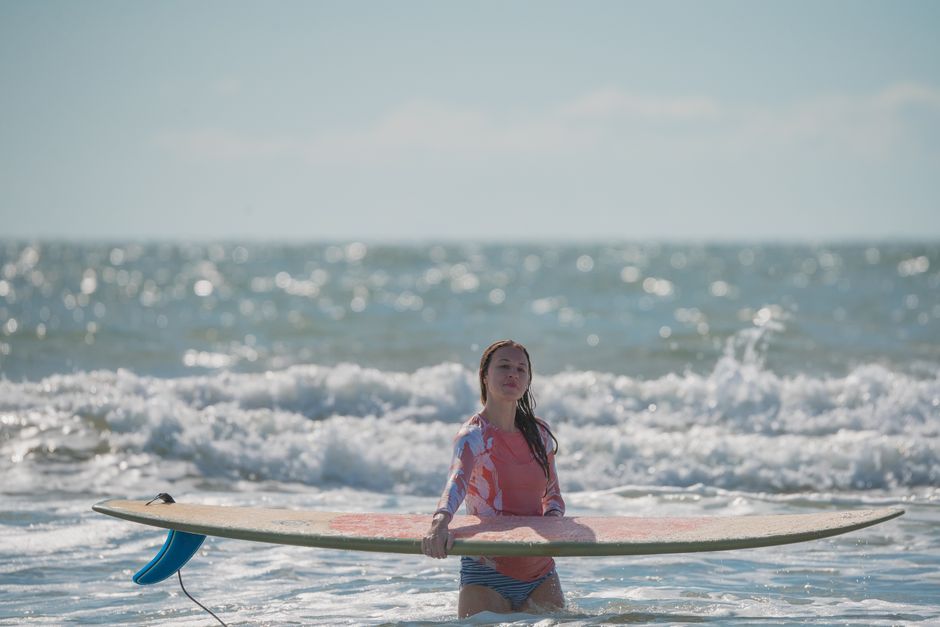
Prevent rash. The original purpose. Surfboard wax, neoprene linings, and chest-high paddling all create friction that abrades skin. A rash guard puts a smooth fabric between skin and the source of friction. After a 90-minute session in waxy chest-paddling, the difference between wearing one and not is the difference between fine and red-and-stinging for two days.
Block UV. Modern rash guards use tight-weave synthetic fabrics with a UPF rating that quantifies sun protection. UPF 50+ blocks at least 98% of UV; UPF 30 blocks about 96.7%. For long sun exposure (surfing, snorkeling, paddleboarding), a UPF 50+ rash guard is meaningfully better than sunscreen alone because it does not wash off.
Light warmth. Rash guards add a thin layer of warmth, usually about half a degree to a full degree of effective comfort in cool water. Not enough to replace a wetsuit but enough to make a borderline session more comfortable. Increasingly used as a base layer under a wetsuit in cold water for the same reason.
Fit choices
Compression fit. Tight, athletic, like a workout shirt. Best for under-wetsuit layering (no bunching), open-water swimming (no drag), and any active use. Modern rash guards in compression fit use four-way-stretch fabric that does not restrict movement.
Athletic / fitted. A middle ground. Tight enough to sit cleanly against the body, loose enough to wear casually. Most of the picks below land here. Common cut for surfing rash guards.
Loose / casual. Like a regular t-shirt. Good for beach wear, casual paddling, and short exposures. Less useful under wetsuits because it bunches.
For under-wetsuit layering or competitive use, choose compression. For surfing and most beach sports, athletic fitted works well. For purely casual use, loose is fine.
Sleeve length
Long sleeve. Maximum UV coverage. The default for sun-heavy environments and tropical use. Adds slightly more warmth in cool water. Most popular choice for surfing.
Short sleeve. Better heat dump in genuinely warm weather. Less UV coverage on the arms (which see most exposure). Common for hot-climate surfing or pool training.
Long sleeve with thumb holes. A sub-style that protects the back of the hands. Useful for snorkelers and people who burn easily on the hands.
Best overall (men’s long sleeve): O’Neill Basic Skins UPF 50 LS
The Basic Skins is what most surfers we know own as a year-round rash guard. UPF 50+, four-way stretch, athletic fit, and a flatlock-stitched neckline that does not chafe. Available in long sleeve, short sleeve, and a women’s-specific cut. Pricing is reasonable; the construction holds up for two-plus years of regular use.
Best women’s long sleeve: Roxy Whole Hearted LS
Roxy’s women’s-specific cut works for women’s bodies in a way that unisex or men’s-cut rash guards do not. UPF 50+, athletic fit through the waist, with sleeves that do not slide up the arms. The Whole Hearted is one of the more consistently recommended women’s rash guards in surf shops we have spoken with.
Best premium / Yulex: Patagonia R0 Yulex Top
The R0 Yulex Top is more than a rash guard; it is a 0.5mm Yulex-rubber top designed to function as both a rash guard and a thin wetsuit. UPF 50+ from the Yulex itself, plant-based natural rubber, and a fit that works as a rash guard in tropical conditions or as a layer under a wetsuit in cooler water. Premium pricing reflects the materials story.
Best mid-range: Quiksilver Heritage LS
The Heritage line is Quiksilver’s rash guard staple. Solid UPF 50+ rating, consistent fit, multiple color options. Less premium than a Patagonia but more than capable. Most surfers we know who do not buy O’Neill end up in Quiksilver.
Best for layering under wetsuit: Body Glove Performance
The Performance line is cut compression-fit and designed specifically for layering under wetsuits. Smooth flat seams that do not bunch under neoprene, and a thinner fabric that does not add bulk. Less fashionable than the surf-brand options but better at the layering job specifically.
Best budget: Hurley One and Only
Hurley’s One and Only line is the closest to a no-frills cheap rash guard that still works. UPF rating, basic stretch fabric, simple construction. Trade-offs are real: less durable than premium options, basic neckline that can chafe on long sessions, less consistent fit. For occasional use or as a backup, it is the right pick.
Best eco / sustainability-leaning: Vissla Twisted
Vissla’s Twisted line uses recycled polyester (rPET) blended with spandex for stretch. UPF 50+, athletic fit, and the eco-leaning materials story you do not get from most synthetic rash guards. Less premium than Patagonia but more accessible price.
How rash guards pair with wetsuits and other gear
Three points.
Under a wetsuit. A compression rash guard underneath a wetsuit prevents neoprene-on-skin chafing, especially at the neck, underarms, and lower back. We wear one under most full suits.
As an underlayer in cold water. A 0.5mm or 1mm thermal rash guard (like the Patagonia R0 Yulex) adds about 3 to 5°F of effective warmth under a 4/3 hooded suit. Increasingly common in PNW and Northeast winter setups.
With board shorts in warm water. The right setup for warm-water surfing is often a rash guard plus board shorts rather than a thin wetsuit. Cooler than neoprene, more flexible, easier to move in.
For broader cold-water gear, see our hood guide, glove guide, bootie guide, and PNW pillar. For care, the wetsuit care and maintenance guide covers rinse and storage.
Comparison table
| Model | Sleeve | UPF | Fit | Price |
|---|---|---|---|---|
| O’Neill Basic Skins | LS | 50+ | Athletic | $25–$40 |
| Roxy Whole Hearted | LS | 50+ | Women’s | $30–$45 |
| Patagonia R0 Yulex | LS | 50+ (Yulex) | Wetsuit-style | $129–$159 |
| Quiksilver Heritage | LS | 50+ | Athletic | $25–$40 |
| Body Glove Performance | LS | 50+ | Compression | $20–$35 |
| Hurley One and Only | LS | 50 | Standard | $20–$30 |
| Vissla Twisted | LS | 50+ | Athletic | $30–$45 |
How we tested
These rash guards have been worn by team members across surfing, snorkeling, and SUP sessions in PNW shoulder months and tropical trips. We log fit, neckline chafing, sleeve creep during paddle strokes, and durability across 20-plus uses. The Hurley One and Only and Vissla Twisted are picks based on construction-spec review rather than firsthand long-term wear; we have flagged that in their reviews. We bought most of these at retail.
Putting it together
For most surfers, a long-sleeve UPF 50+ rash guard (O’Neill Basic Skins or Quiksilver Heritage) covers 90% of the use case. Add a compression rash guard for under-wetsuit layering if you do long sessions in a wetsuit. Add a thermal Yulex top if you surf cold water and want a base layer.
For broader gear context, see the PNW pillar, best surfing wetsuits, and complete guide to choosing a wetsuit. To find the right thickness for your specific water, the Wetsuit Finder tool takes 60 seconds.
Frequently asked
What is a rash guard actually for?
Three jobs: prevent rash from board wax and neoprene rubbing against bare skin, block UV in the water, and add a thin warmth layer under or instead of a wetsuit. Most rash guards do all three to varying degrees. The label often emphasizes one (e.g., 'UPF 50' or 'compression') but the practical use is broader.
Do I need a rash guard if I am wearing a wetsuit?
Sometimes. A neoprene wetsuit lining can chafe at the neck, underarms, and shoulders during long sessions. A thin rash guard underneath stops the rubbing. A rash guard is also useful in winter for the second-skin layer of warmth and is increasingly common in cold-water surfing as a base layer.
Compression vs loose fit?
Compression rash guards (tight, athletic fit) reduce drag in the water and minimize chafing, especially under a wetsuit. Loose-fit rash guards (more like a t-shirt) are easier to wear casually but bunch up under a wetsuit and feel less supportive in the water. For surfing or swimming, compression is the standard. For relaxed beach use or as a sun shirt, loose-fit is fine.
How is UPF rated?
UPF (Ultraviolet Protection Factor) measures how much UV radiation a fabric blocks. UPF 30 blocks about 96.7% of UV; UPF 50 blocks about 98%. UPF 50+ is the highest rating and reflects fabric that has been tested at that level when both new and after typical use. For surf, dive, or beach exposure, UPF 50 or higher is the right baseline. Lower UPF is fine for short exposure or cloudy days.
About The WetsuitCenter Team
Our buying guides are written and maintained by staff who actually get cold and wet testing this gear: surfers, divers, and open-water swimmers logging real hours across seasons and water temps.
You might also like
Best Changing Robes: Dryrobe, Red Original, and Alternatives
The best changing robes for cold-water surfing and dawn-patrol parking-lot changes, comparing Dryrobe, Red Original, and budget alternatives.
Best Wetsuit Booties: Round Toe vs Split Toe
The best wetsuit booties across thickness, fit, and toe-style. Round toe vs split toe explained, with picks for cold-water and shoulder-month use.
Best Wetsuit Gloves: From 2mm to 7mm
The best wetsuit gloves across surfing, diving, and open-water swimming, with thickness selection, dexterity tradeoffs, and tested picks for each price tier.