
On this page
- The two jobs a wetsuit has
- How the foam actually insulates
- The thin water layer: myth vs reality
- Convection and conduction: how heat actually leaves
- Why fit determines warmth
- Why seams matter
- Why linings matter
- Why buoyancy increases with thickness
- What makes a premium wetsuit actually perform better
- Why you feel cold in some sessions and not others
- The practical takeaways
A wetsuit is a simple-looking piece of gear with surprisingly nuanced physics behind it. Understanding how wetsuits actually work. Not just the marketing explanations. Changes how you shop, how you wear them, and how you interpret the differences between a good suit and a bad one.
Key Takeaways
- • Wetsuits insulate primarily through trapped gas cells in foamed neoprene, not through the thin water layer.
- • The "water layer" is real but secondary. A wetsuit works even if you enter it dry.
- • Convection and flushing. Not conduction. Is the main way you lose heat in cold water.
- • Fit determines flushing, which means fit determines warmth more than thickness does.
The two jobs a wetsuit has
To keep you warm in cold water, a wetsuit needs to do two things:
- Provide insulation between your skin and the cold water around you.
- Minimize water exchange between the inside of the suit and the outside.
The first job is material science. What the suit is made of. The second job is fit. How the suit interacts with your body.
Most beginner buyers focus almost entirely on the first (thickness, material, brand) and almost ignore the second (fit, seams, flush zones). This is backwards. Fit drives more real-world warmth than material does. A poorly-fitting premium suit underperforms a well-fitting budget suit. Every time.
How the foam actually insulates
The material inside a wetsuit is foamed neoprene. Neoprene rubber with millions of tiny gas cells trapped inside. The gas cells are the key insulator. Gas is a very poor conductor of heat compared to liquids or solids, so trapped gas significantly slows heat transfer.
This is the same principle that makes foam insulation work in building walls, or that makes a down jacket warm. In all three cases, the material itself is secondary. What matters is the tiny pockets of trapped gas disrupting the flow of heat.
In a wetsuit:
- Cold outside water tries to pull heat from your body through the suit.
- Each gas cell in the neoprene acts as a tiny insulation barrier.
- Thousands of cells stacked through the neoprene thickness substantially slow the heat transfer.
- Your body’s continuous heat production keeps your skin and the layer immediately around it warm.
The thicker the neoprene, the more cells between you and the cold. Hence the temperature-to-thickness relationship we cover in the thickness guide and temperature guide.
The thin water layer: myth vs reality
You’ve probably heard: “A wetsuit traps a thin layer of water against your skin, which your body heats up and keeps you warm.”
This is partially true but overstated. Here’s what’s actually going on:
Yes, water does get inside a wetsuit. Most wetsuits aren’t fully waterproof. Water enters at the neck, wrists, ankles, and through seams over time. That water does warm up against your skin and becomes a minor insulation layer.
But:
- Wetsuits work when worn dry. If you step into a dry wetsuit and then jump into cold water, you stay warm. The foam is doing almost all the work before any water layer forms.
- The water layer is a heat sink, not a heat source. Cold water entering the suit has to be heated by your body. Which costs you calories and time. Less water inside = better.
- “The water layer keeps you warm” is rhetorical shorthand for “the trapped water eventually warms up instead of flushing constantly.” The real goal is to minimize water exchange, not to maintain a water layer.
A dry suit (genuinely waterproof) performs better than a wetsuit because it keeps water out entirely. The “water layer” mythology sometimes makes people think their wetsuit should be wet inside to work. It shouldn’t. Dryer is warmer.
Convection and conduction: how heat actually leaves
To understand what matters in a wetsuit, you need to know how heat leaves your body in water.
Conduction is heat moving through direct contact. From your skin, through the neoprene, to the water outside. Thicker neoprene slows conduction. Better cell structure (premium neoprene) slows it further. This is the baseline insulation that thickness gives you.
Convection is heat moving via fluid motion. Cold water flowing past warm water, replacing it. This is the big one. When you duck-dive, cold water rushes through any gap in your suit. When you paddle, water flows around and through the suit continuously. Each movement is a convective heat loss event.
Evaporation is heat loss through water turning to vapor. Matters on the surface (especially in wind) and hardly at all underwater.
Radiation is heat loss via infrared emission. Matters very little in water. Mostly a factor for surface skin in cold air.
For cold-water surfing, convection dominates. Your wetsuit’s real job is to minimize convective exchange. That is, minimize flushing. This is why fit, seams, and cuff seals matter so much.
Why fit determines warmth
A wetsuit that’s too big has two problems:
- Larger water volume inside. More water to heat up before you feel warm.
- Larger flush volume. Every movement exchanges more water.
A too-big 4/3mm can be colder than a too-small 3/2mm because the oversized suit flushes continuously while the properly-fit thinner suit doesn’t.
A well-fitted suit:
- Has minimal empty space between suit and skin.
- Maintains a stable warm layer at the skin.
- Resists flushing at neck, wrists, ankles, and seams.
This is why our fit guide treats “pooling at the lower back” as a dealbreaker. That pool of fabric creates a literal pocket of cold water that flushes through the suit on every movement.
Why seams matter
Seams are where panels of neoprene are joined. Each seam is a potential flush point. Tiny channels where cold water can enter even in a well-fitted suit.
Flatlock seams: Wide, visible stitching through-and-through. Flexible and durable, but the stitches are literal channels for cold water. Fine for warm water; a liability below 68°F.
GBS (glued and blind-stitched) seams: Glued, then stitched from only one side with a curved needle. Much more watertight. The standard for 3/2mm and 4/3mm suits.
Taped or liquid-sealed seams: GBS plus an additional layer of tape or rubber seal. Near-watertight. Necessary for cold water.
Bonded (welded) seams: No stitching, just thermal or adhesive bonding. Maximally watertight. Top-tier suits.
The seam hierarchy is a hierarchy of flush resistance. See our construction guide for the full breakdown.
Why linings matter
A plush thermal lining (brand names vary: Firewall, TDC, Flash Lining) traps a thin layer of air against your skin. Not water. Air is an even better insulator than water, and the trapped air-filled lining does several useful things:
- Buffers the cold shock when you first enter the water.
- Speeds up warmth recovery after a flush. The lining re-traps air faster than bare neoprene does.
- Wicks moisture (in faster-drying designs) so you enter colder without as much residual wet interior.
A suit with premium neoprene but a bare jersey lining is noticeably cooler than the same suit with a thermal lining. This is often the difference between “I can surf 90 minutes” and “I get cold at 45.”
Why buoyancy increases with thickness
Trapped gas doesn’t just insulate. It floats. Foamed neoprene is substantially less dense than water.
A 3/2mm suit adds modest buoyancy. A 5/4mm adds a lot more. A 6/5mm adds enough that cold-water divers have to add 2–4 kg of weight to their belts to compensate.
For surfing, added buoyancy is generally helpful. It holds you up during paddles and helps catch waves. For diving, it’s a calibration task. For triathlon, buoyancy distribution is engineered into the suit design (legs buoyant, shoulders not), which is what makes tri suits their own category. See best triathlon wetsuits.
What makes a premium wetsuit actually perform better
Given the physics, here’s what you’re paying for in a premium suit:
- Denser, more uniform cell structure. More insulation per millimeter.
- More flexible neoprene. Easier to stay active, which generates body heat.
- Better seam construction. Minimal flushing.
- Thermal lining. Faster warmth recovery after flushes.
- Cuff seals. Reduces flushing at neck, wrists, ankles.
- Chest-zip or zipperless entry. Eliminates the long back-seam flush pathway.
A mid-range suit typically has 1, 2, 3 at lower levels. A premium suit has 1-6 all at high levels. The compound effect is meaningful. Not a marginal spec sheet difference but a session-quality difference.
Why you feel cold in some sessions and not others
Even with the perfect suit, you’ll have cold sessions. Reasons:
- Wind. Evaporative heat loss in air rises sharply with wind. A windy beach day is colder than a glassy morning at the same temperature.
- Session length. Your core cools over time; your body’s heat output drops as you fatigue.
- Meal timing. Low blood sugar = less heat production. Eating 45–60 minutes before a session helps.
- Sleep. Tired = cold. Directly measurable.
- Age. Heat production drops slightly with age, all else equal.
- Previous exposure. Back-to-back cold sessions deplete your body’s heat reserves.
None of these have to do with the suit. Understanding them prevents blaming gear for body-driven issues.
The practical takeaways
The physics simplifies into a few rules for buyers:
- Fit beats thickness. A well-fitted 3mm is warmer than a loose 4mm. Buy the right size, every time.
- Seams matter as much as material. A suit with taped seams performs above its thickness tier.
- Lining matters more than you think. Thermal plush is a real upgrade, not marketing.
- Flushing is the enemy. Design choices that reduce flushing (chest-zip, sealed cuffs, good neck seal) translate directly to warmth.
- Buy for the cold end of your usage. Once cold, you can’t warm back up in the water. Under-buying warmth is the most common mistake we see.
For the full buying framework, start with how to choose a wetsuit. For a tuned recommendation matching your specific water and use case, try the Wetsuit Finder.
Frequently asked
Is the water layer inside a wetsuit really what keeps me warm?
Partly, but it's a contributing factor, not the main one. The primary insulation is the trapped gas cells in the neoprene foam itself. The same principle that makes foam insulation work in buildings. The thin water layer between suit and skin does warm up and contribute some insulation, but a wetsuit works even if you enter it dry. The 'water layer' myth overstates this specific mechanism.
Why does a tight wetsuit keep me warmer than a loose one?
Because a loose suit constantly exchanges water. Every time you move, cold water flushes in and your body-heated water flushes out. The result is your body perpetually heating new cold water instead of holding onto a stable warm layer. A snug suit minimizes this exchange, letting a stable warm layer persist.
Does the rubber material keep me warm, or is it about trapping air?
Both, but the trapped gas cells do most of the work. Neoprene as a solid rubber isn't a great insulator. Neoprene as a foamed closed-cell material is an excellent insulator because each tiny gas bubble disrupts heat transfer. The more uniform and plentiful those cells, the better the insulation per millimeter.
Why do I get cold faster in moving water than still water at the same temp?
Convective heat loss. Moving water physically replaces the warm water next to your skin faster than still water does, pulling heat away at a higher rate. This is why waves, currents, and duck-dives make you cold faster than sitting still, and why windy conditions feel colder than glassy ones even at identical water temps.
About The WetsuitCenter Team
Our educational articles are reviewed by longtime surfers, divers, and open-water swimmers on staff. We cross-check technical claims against manufacturer specs and published research.
You might also like
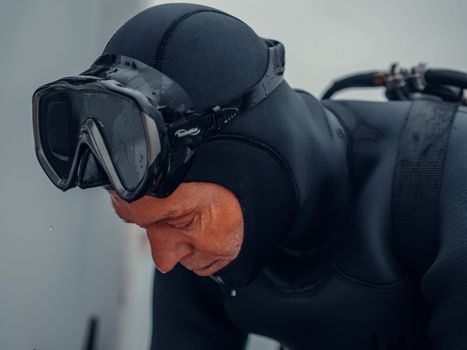
Wetsuit Thickness Guide: What Do the Numbers Mean?
The real meaning of 3/2mm, 4/3mm, and 5/4mm wetsuit labels. How thickness distribution works, why it matters, and how to pick the right combination for your water.

The Science of Wetsuit Warmth: How Neoprene Insulates
How a wetsuit actually keeps you warm: closed-cell neoprene, trapped water, body heat, and the physics that makes a 4mm wetsuit work in 50 degree water.
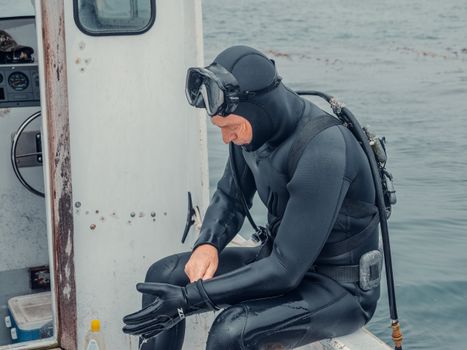
How Long Does a Wetsuit Last? (And How to Make Yours Last Longer)
Realistic wetsuit lifespan ranges by quality tier, usage frequency, and care. Signs your wetsuit is done. Plus the habits that meaningfully extend its life.